Churches of Britain and Ireland
|
Each entry below has a photo or illustration of a church. In most cases there are no (or inadequate) indications of where the church is, and unless you know the church personally, cunning detective work will be required to discover its identity. That can involve the building stone - is it knapped flint, sandstone or granite? Architectural styles can also help narrow the field, and for exterior views, the surroundings may also offer clues. And for postcards, the location of the publisher may be helpful. Sometimes of course, the mystery remains just that - some of the entries below have been unsolved for years, and perhaps may never be solved. Once solved, the entry will move to the alphabetical list below, and, at a later date, archived here. And churches which have been unsolved for years are now being transferred to a new page, to keep this page manageable. Initially, I'm transferring entries which have been unsolved since 2010. If you enjoy the challenge of
identifying churches, try
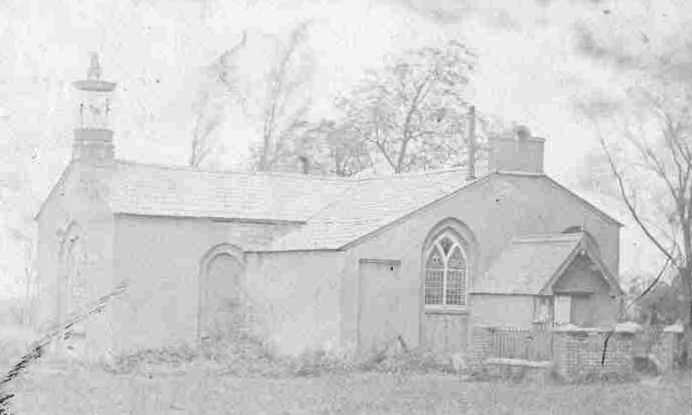
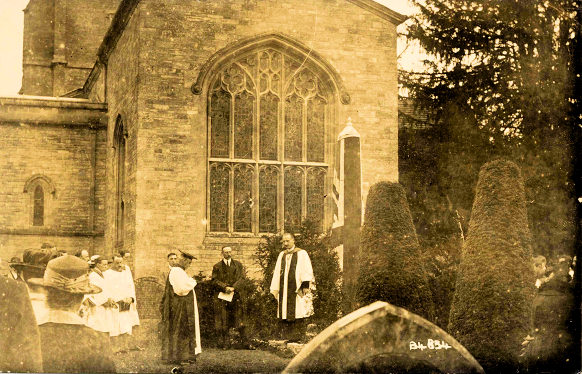
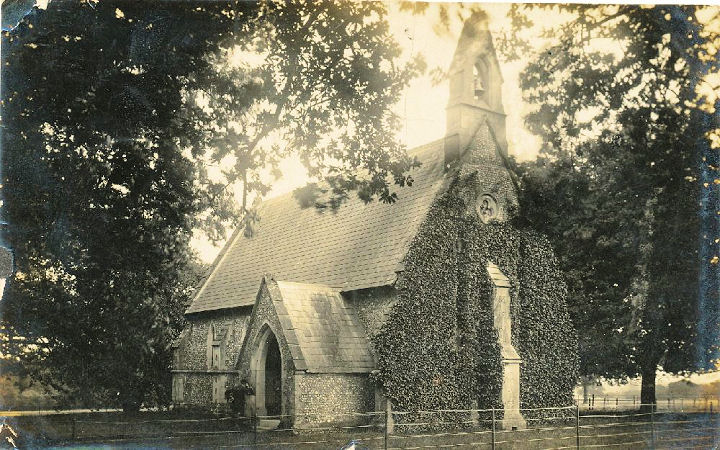
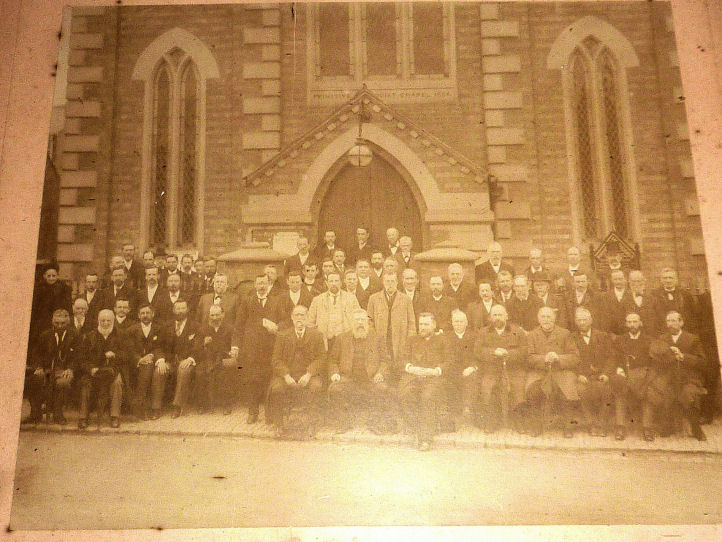
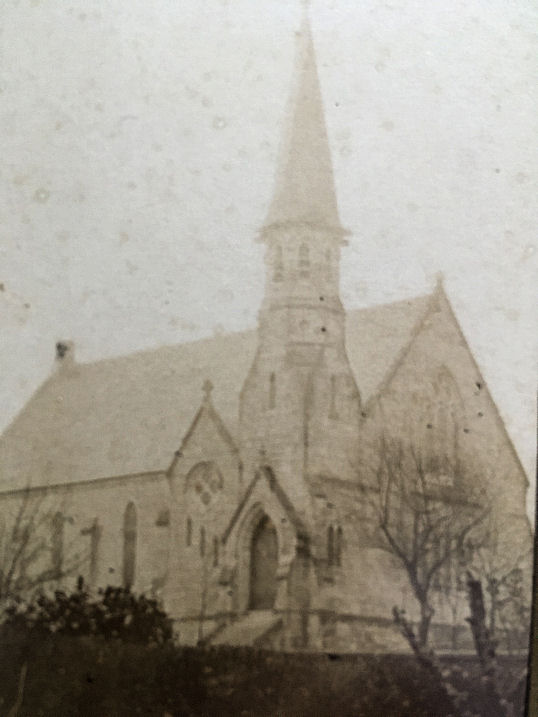
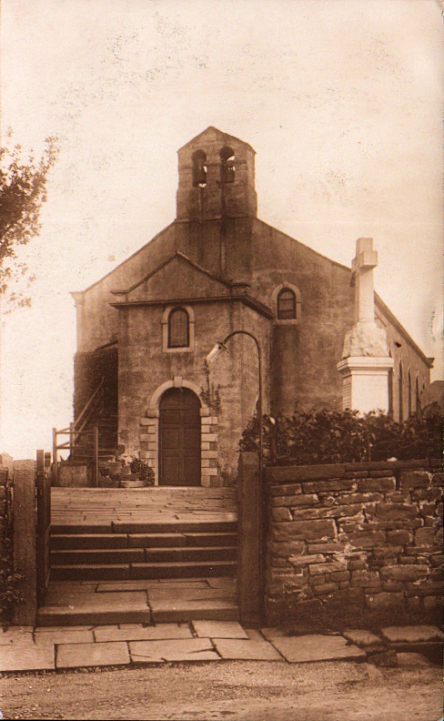
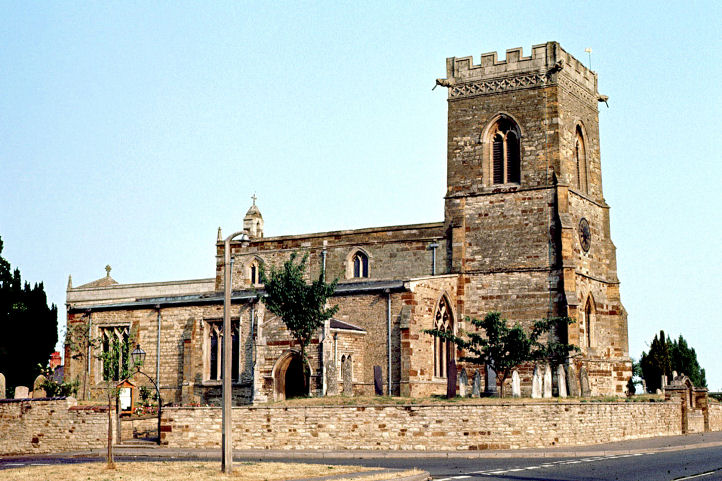
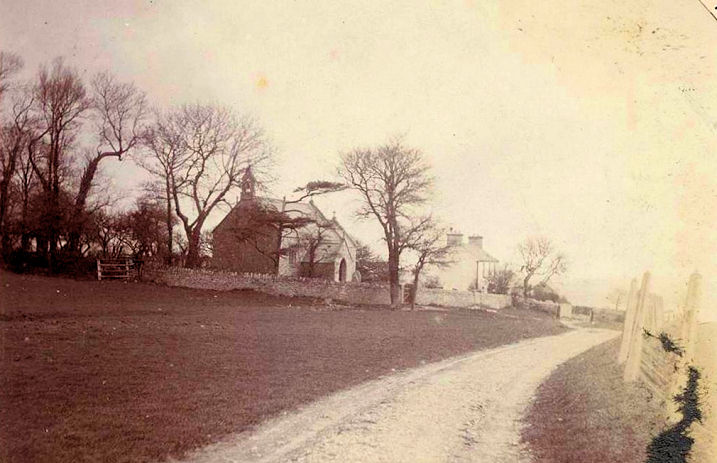
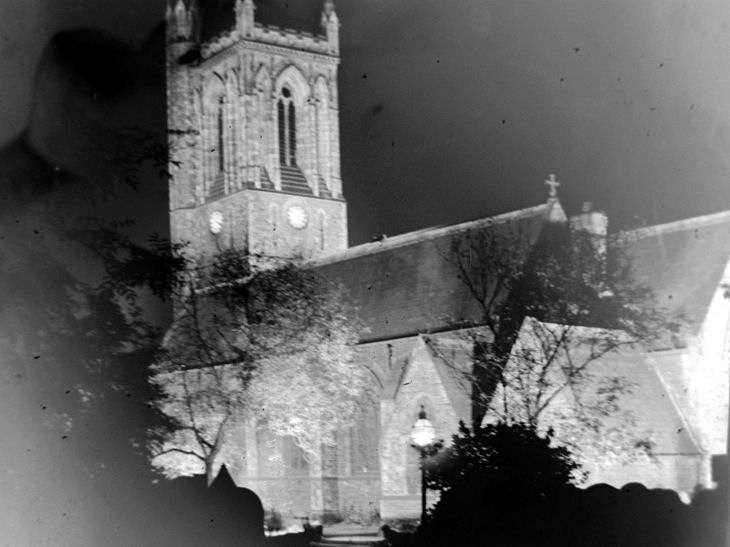
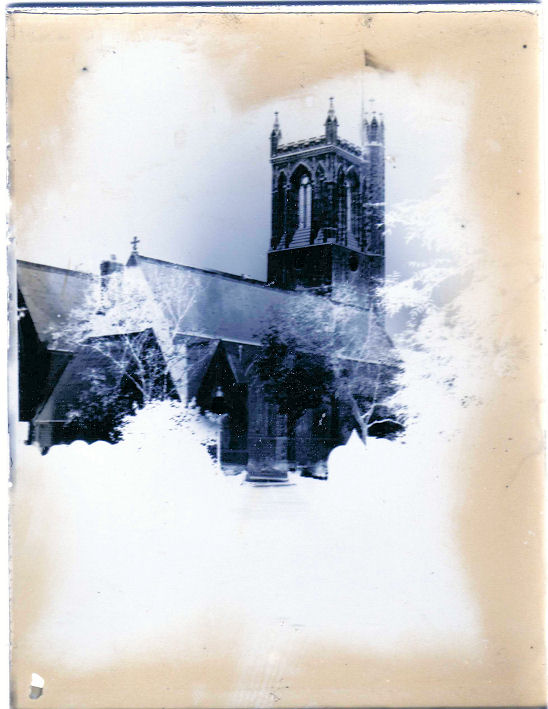
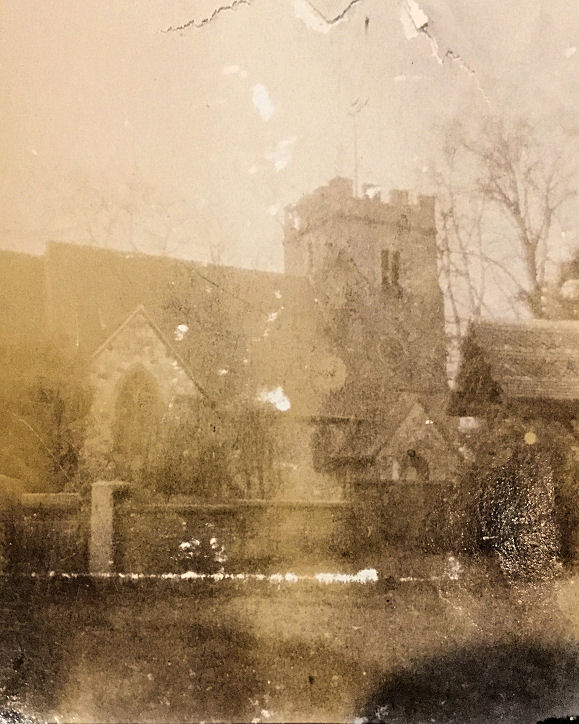
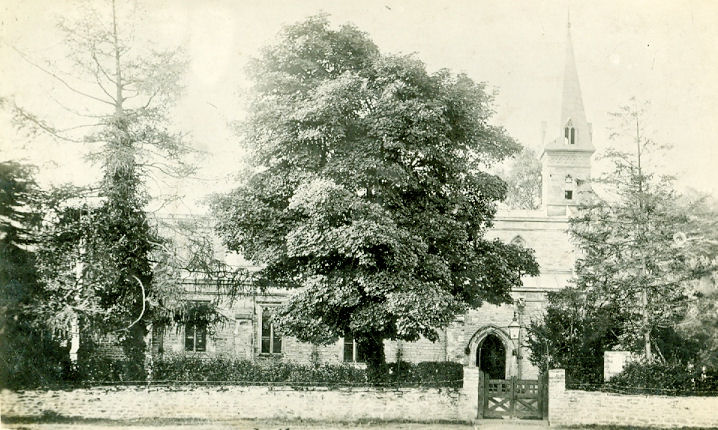
here as well (external website). These four entries had been transferred to the long-term unsolved page, and, as they've now been solved, returned to this main page - A photograph of a church, perhaps taken in Victoria's reign, possibly either in Flintshire (maybe near Mold or Buckley), or Cumberland (perhaps in the Maryport/Dovenby/Little Broughton area). © David Knowles. See Buckley, Flintshire, below. Having been on the long-term unsolved page for years, It's now returned here as it has been solved, by John R. Parker. Ian Lewis had sent in a photo of the unveiling of a war memorial. Thought to possibly be in Cumbria, John has shown that it's St John at Wicken in Northamptonshire. For more details, see Wicken, Northamptonshire, below. From John Bowdler's
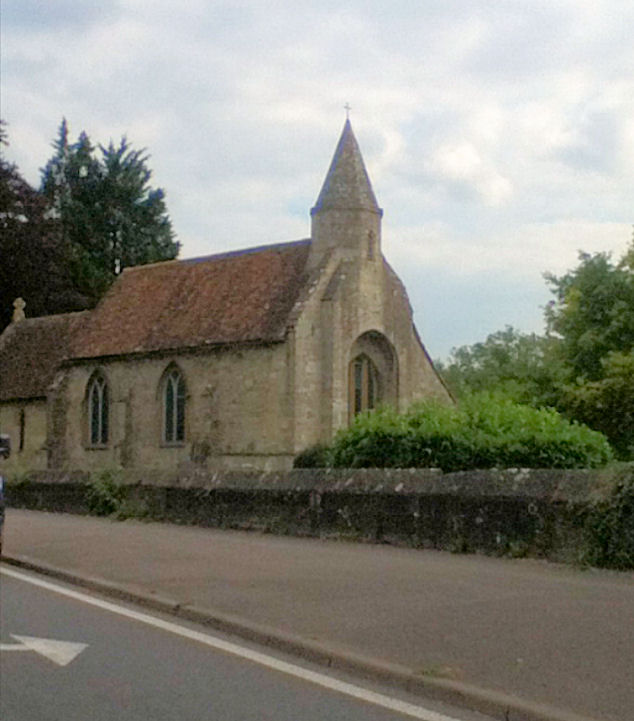
Collection - a small chapel, has been
identified after many years by Janet Gimber as Thedden Episcopal Church
near Alton in Hampshire. For more details see the
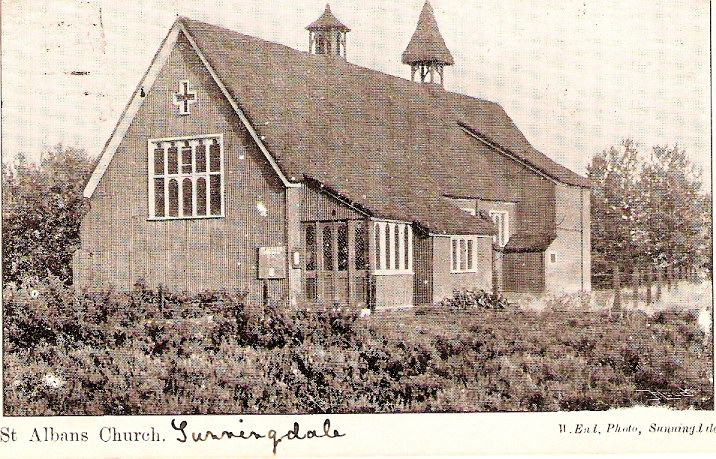
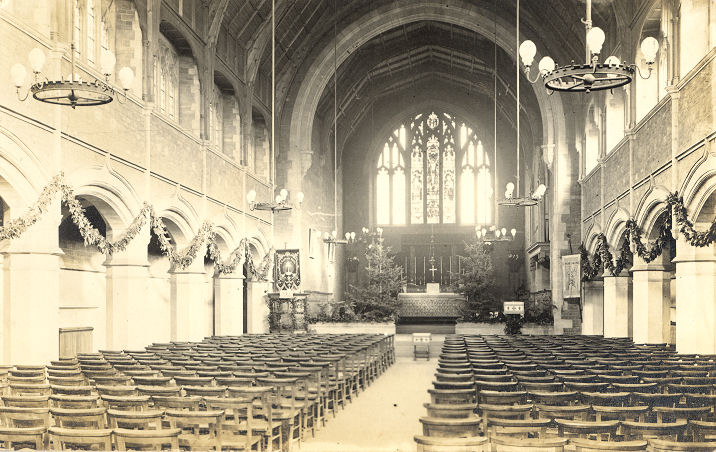
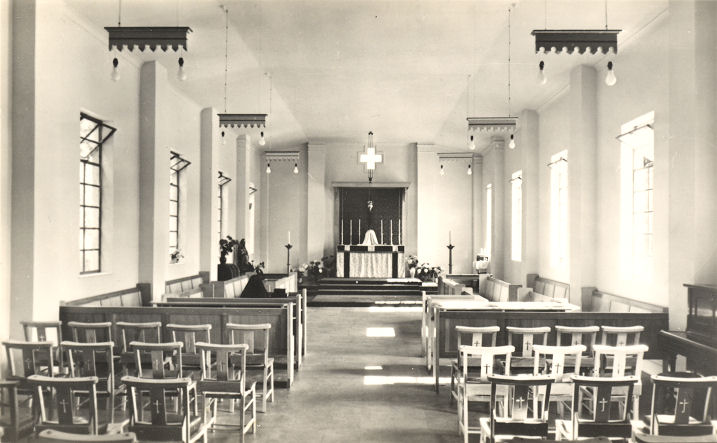
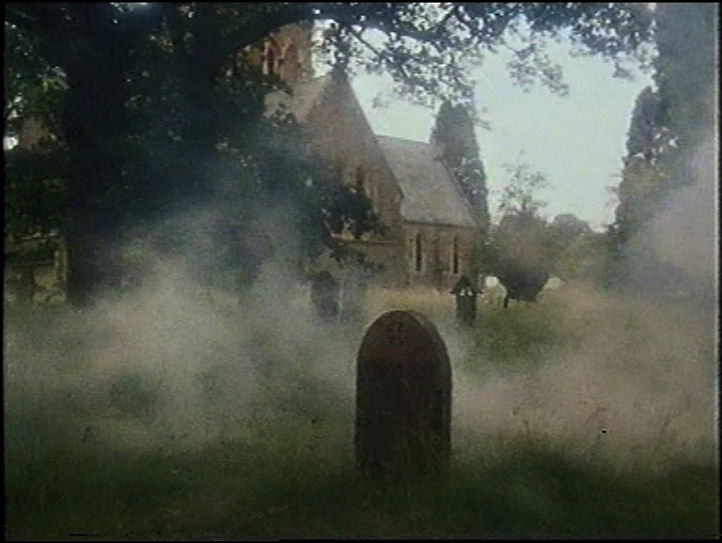
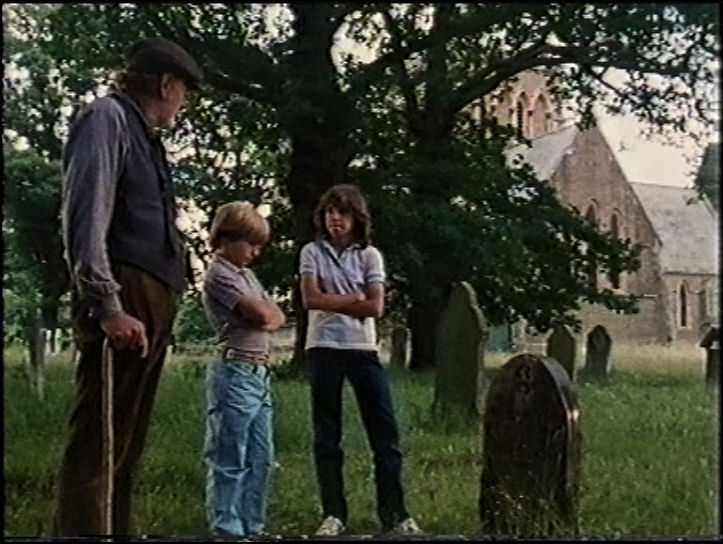
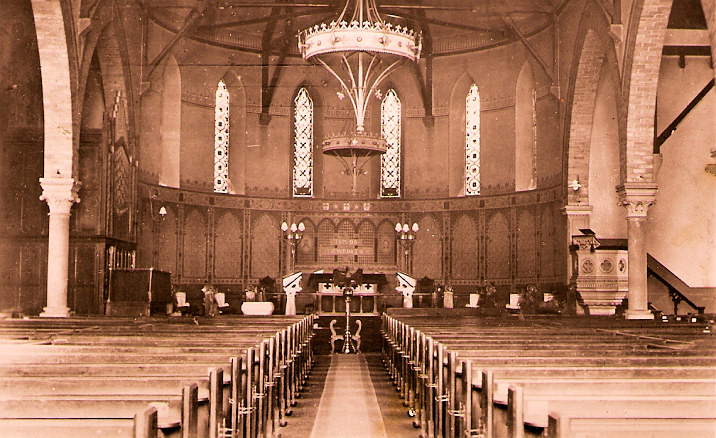
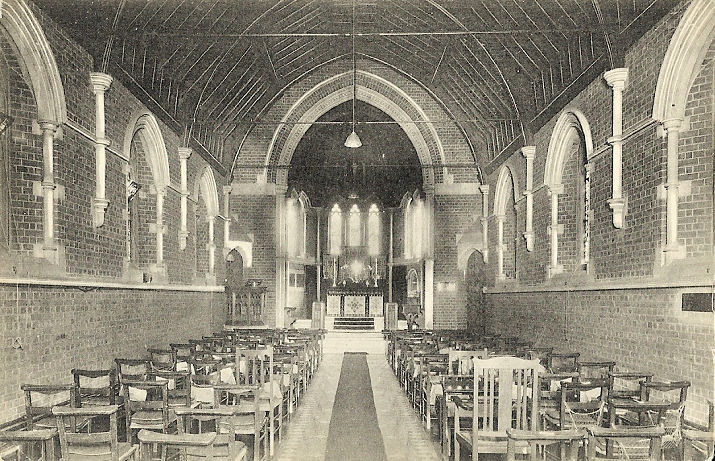
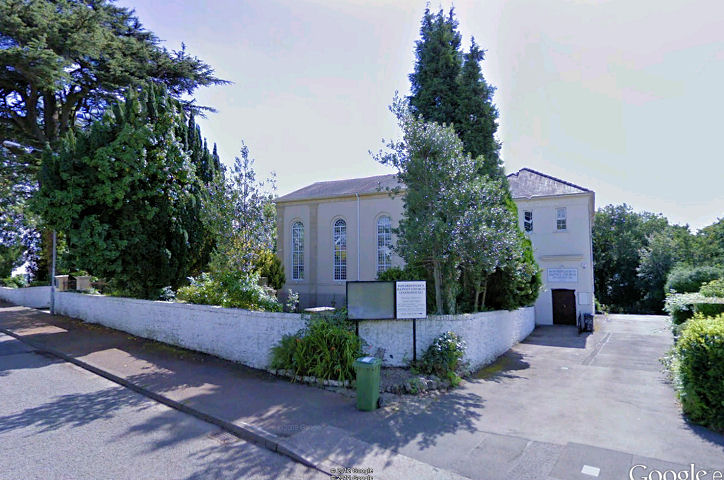
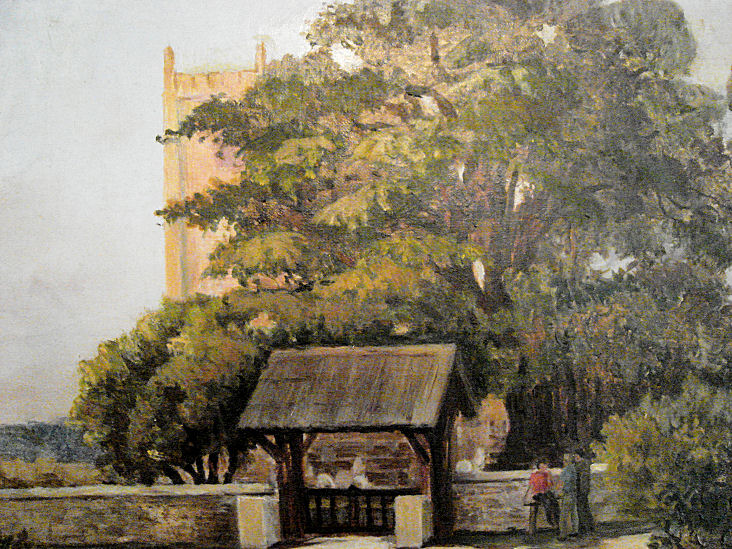
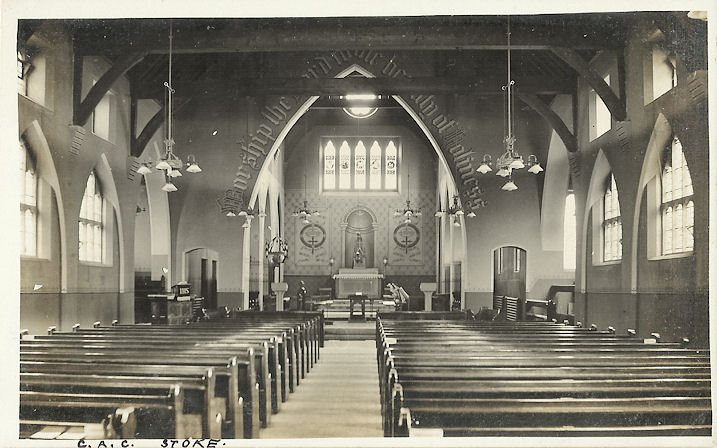
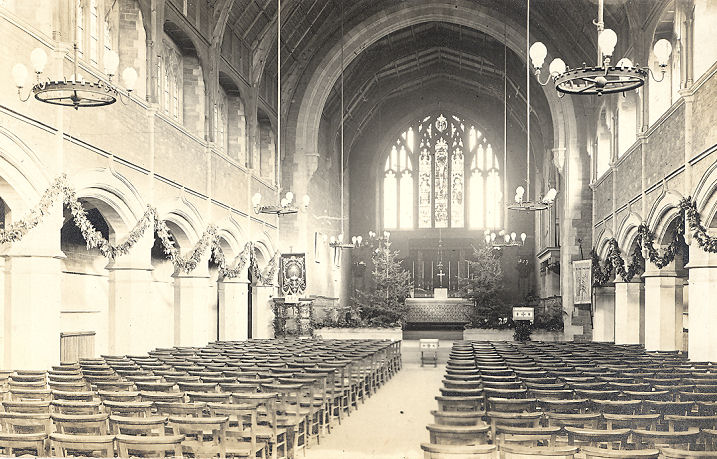
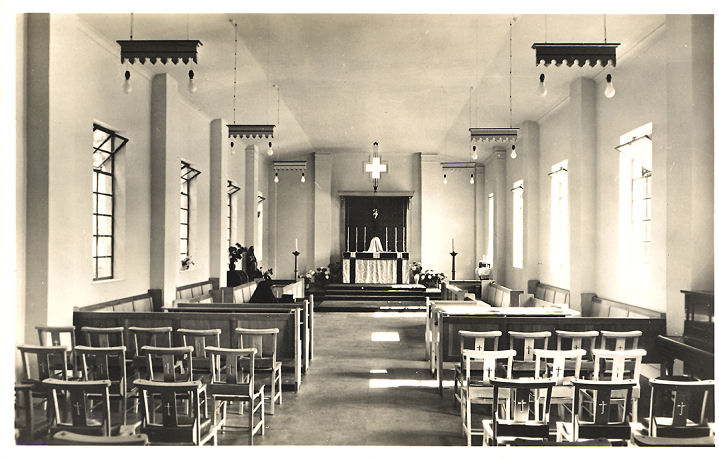
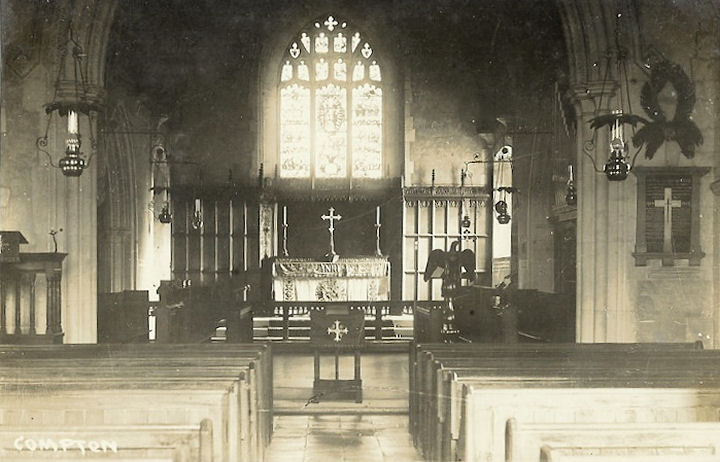
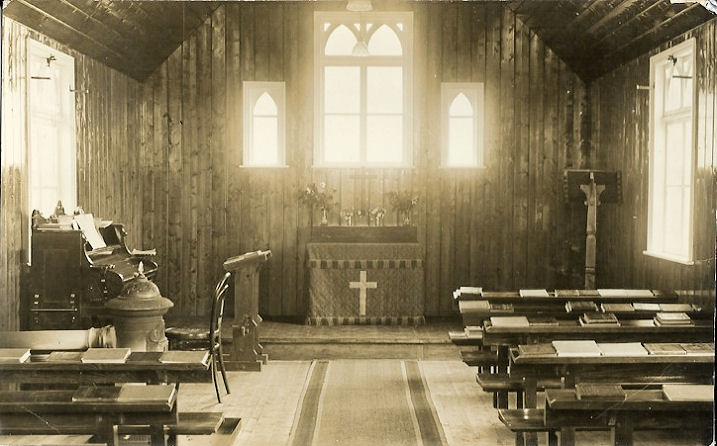
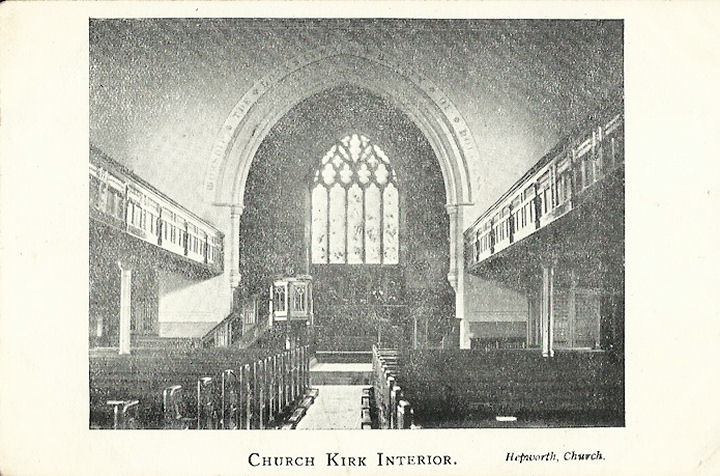
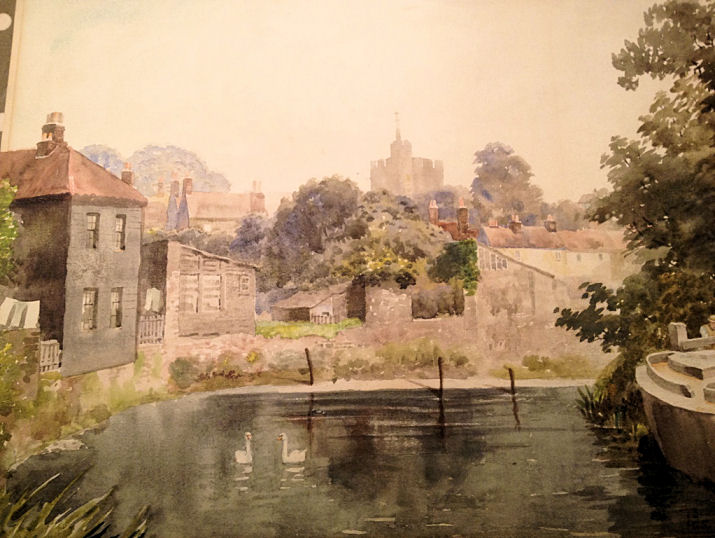
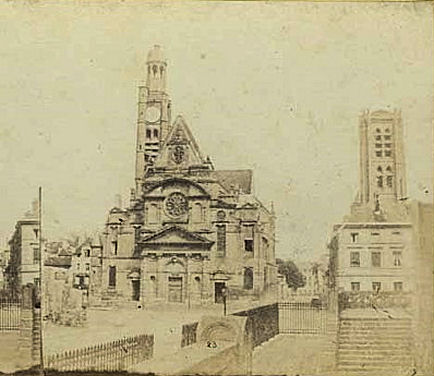
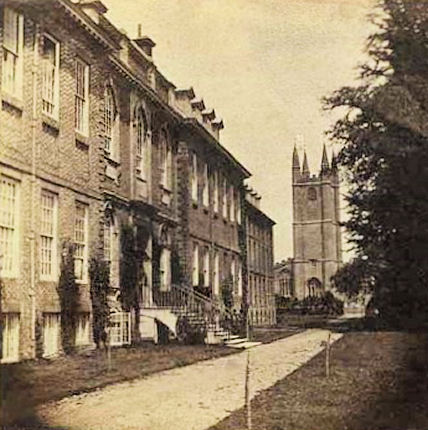
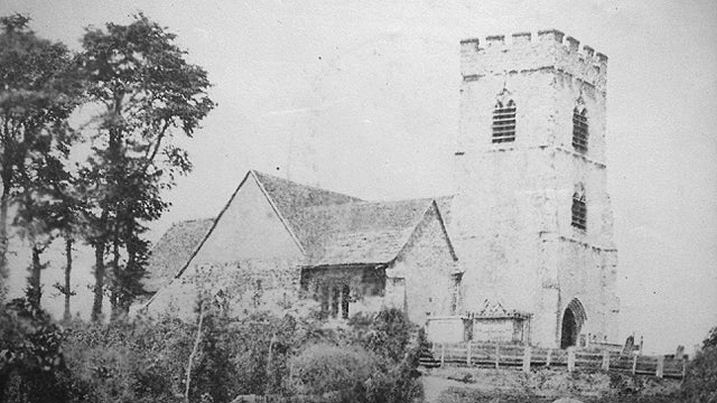
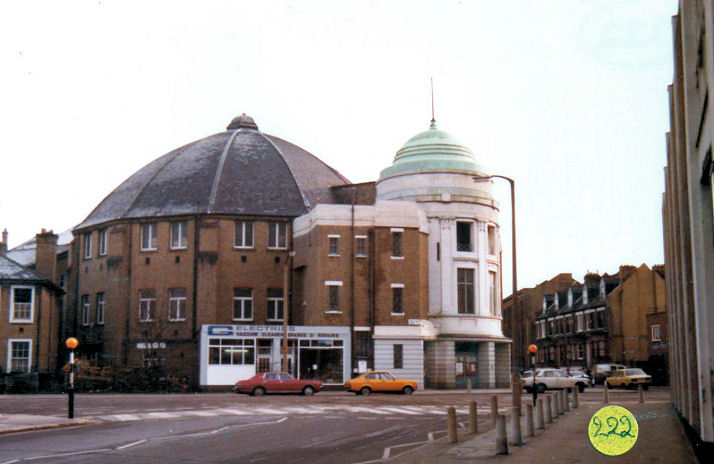
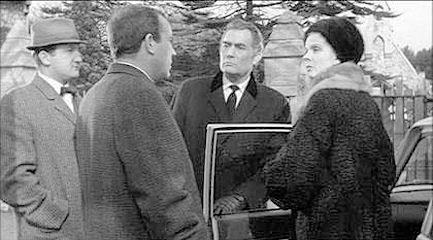
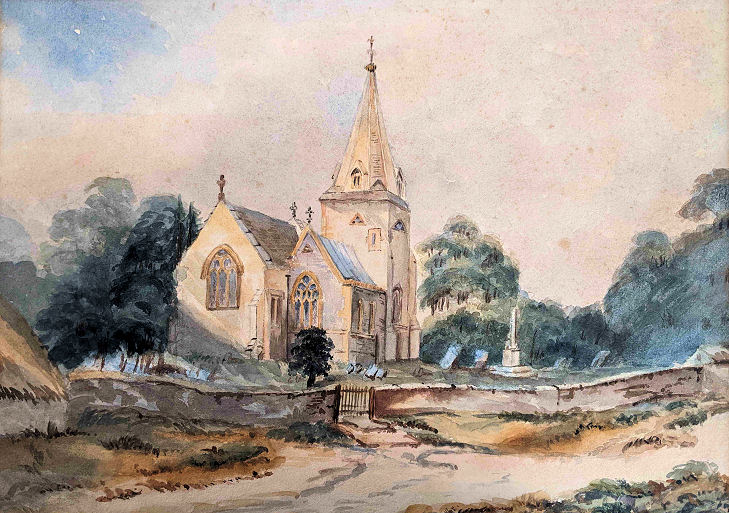
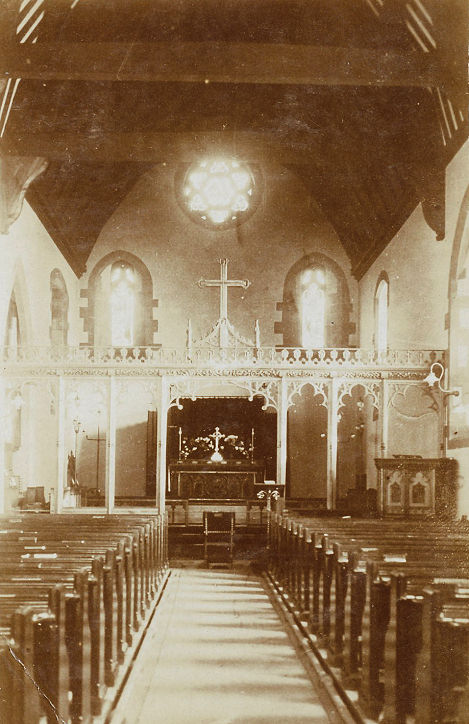
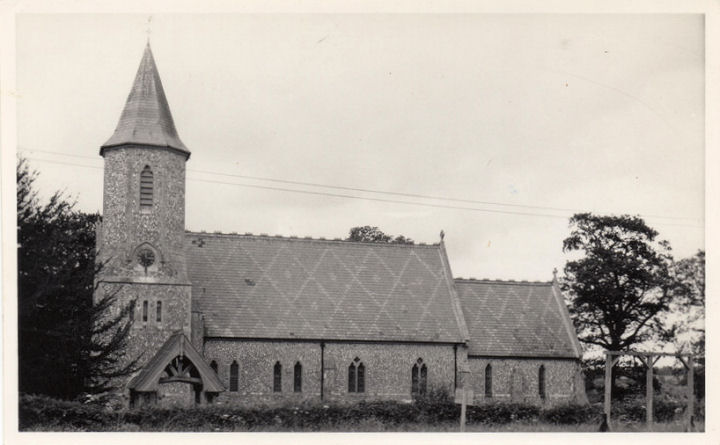
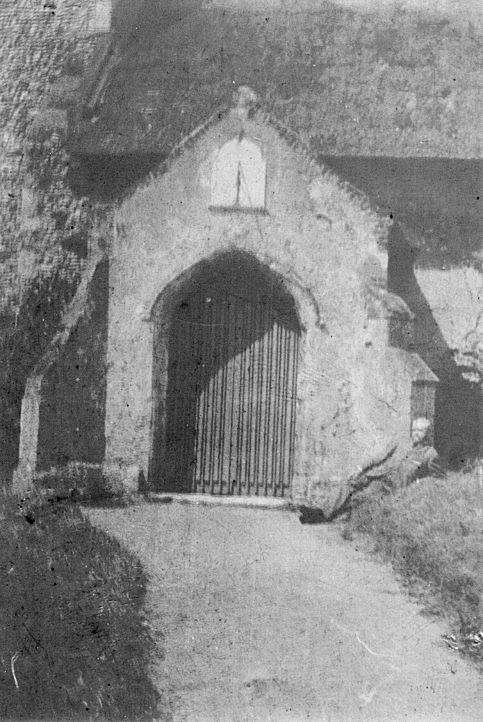
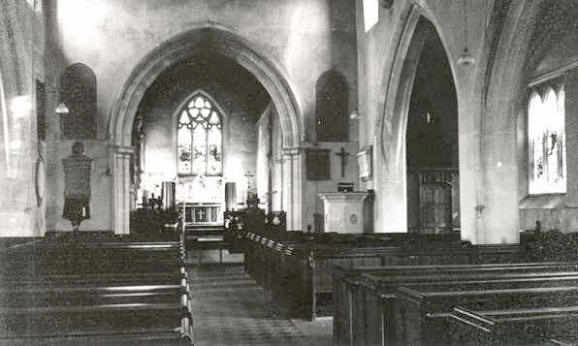
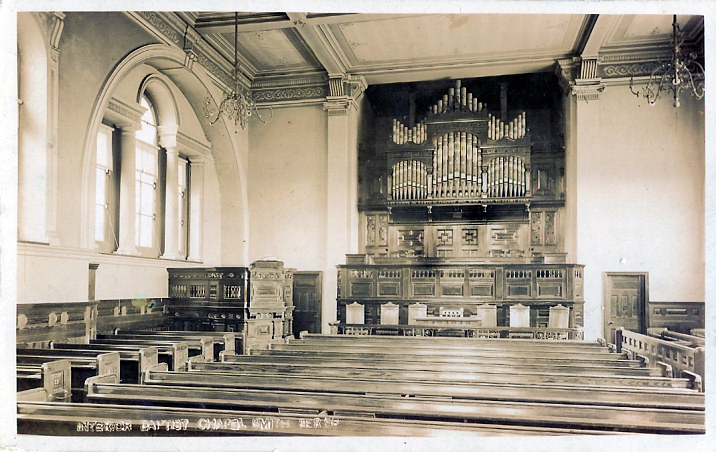
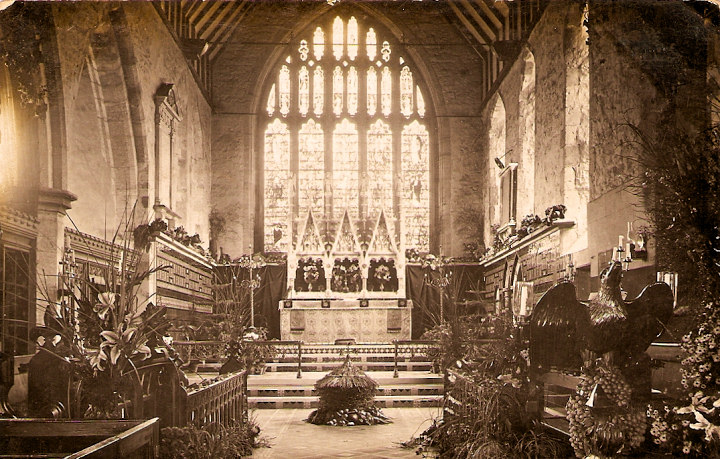
Alton page. David Jones is trying to identify a Primitive Methodist Chapel. Above the door is a date, perhaps 1856. See the Sileby, Leicestershire, entry below. Another postcard from Judy Flynn's collection. St. Alban at Sunningdale is possibly the demolished one mentioned here (just beneath the church photo), but positive proof would be welcome. The postcard was posted in 1905. Howard Richter advises that the footprint of the church in the postcard is not contradicted by map evidence, and the grid reference would have been SU 943 660. It appears to have been built between 1900 (not on a map of that year), and before 1915. Another old postcard shown here (scroll down) is again entirely consistent with this being the Sunningdale St. Alban's. It also says that it was a daughter church to Windlesham (St. John the Baptist). Q.E.D. Now, a couple from my own (Steve Bulman's) Collection. First a rather grand interior, decked out for Christmas celebrations. [Now solved - se Kettering, St. Mary the Virgin, below]. Next, another interior, very plain in contrast to the last one. John Williams has suggested a Catholic or Anglo Catholic chapel for the latter interior, and from the appearance of the windows, which he suspects may be Crittals, possibly from the 1920's or 1930's. We've had some success identifying churches used in films - here's another. Ian Stapleton has sent in two frames (1, 2) from Haunters of the Deep (1984). It was filmed mostly in Cornwall, with village scenes in Portloe, but the church isn't the one in Portloe (shown here on Geograph). Greg Mishevski has suggested Holy Trinity, Botleys and Lyne, Surrey. There is certainly nothing that contradicts this in the following photographs on Geograph (1, 2), and the Google Earth view from the road (search for botleys holy trinity) is supportive, even as far as the types and positions of trees. However, the film still was evidently taken from the rear of the church, and myself and others have been unable to find a photo on-line taken from that direction. If you can find a photo, or even better, visit the church and take one - definitive proof would be excellent. Dave Godden recommends Bing birds-eye view for looking at the church. Two more from Judy Flynn. Written on the back of the
first is "Emley, near Huddersfield, West Yorkshire", but it isn't the parish church, so what is it? Greg Mishevski has tentatively suggested the demolished Emley Bethel Wesleyan Reform Union Church on Upper Lane, which is shown on old maps. Built 1854, closed 1995
and demolished 1997, these two links (1,
2) refer to it, but don't include photos. Can you confirm or refute the
suggestion? Both Janet Gimber and Brian Curtis have managed to find photos which
imply that it isn't the Bethel Chapel. See the following -
link1,
link2,
link3
(click "Go to resource"). David Regan doubts that the church is at Emley at all, as he knows the area; he also points out that the houses at the
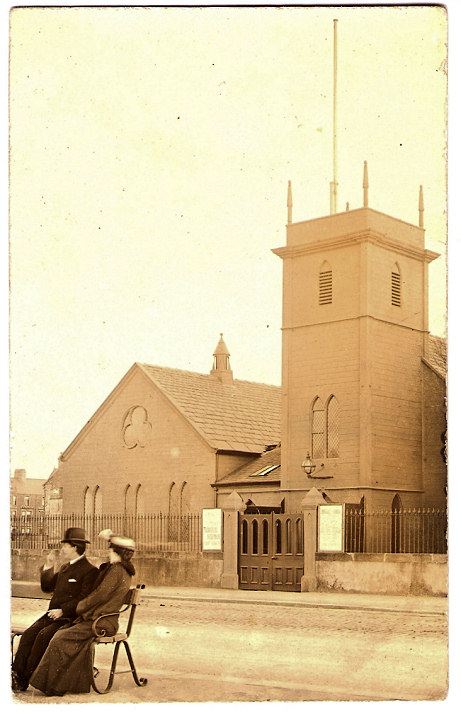
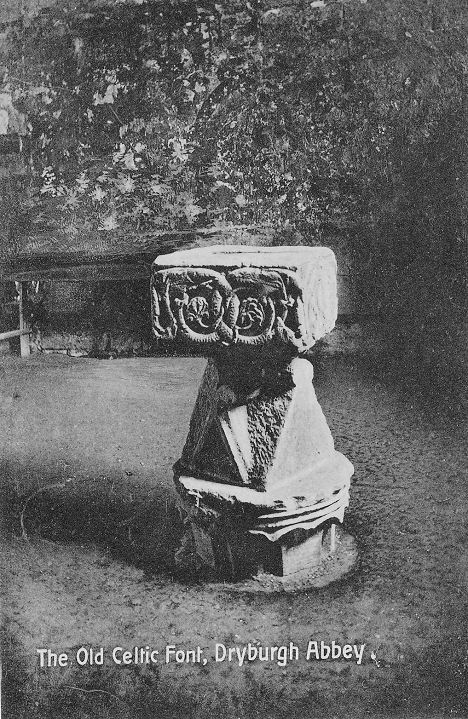
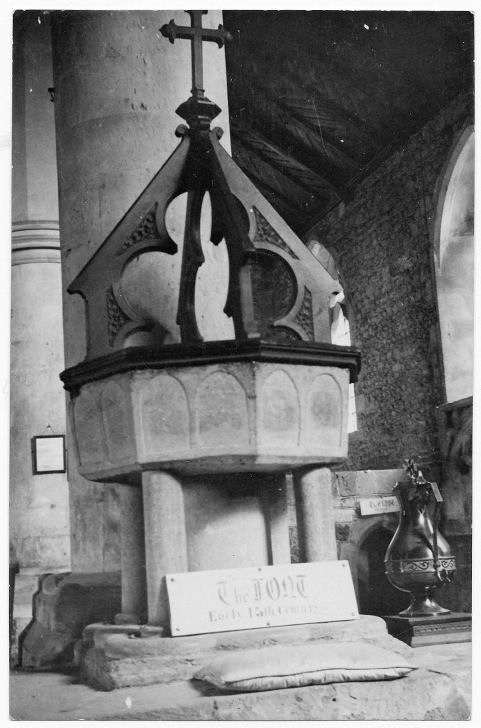
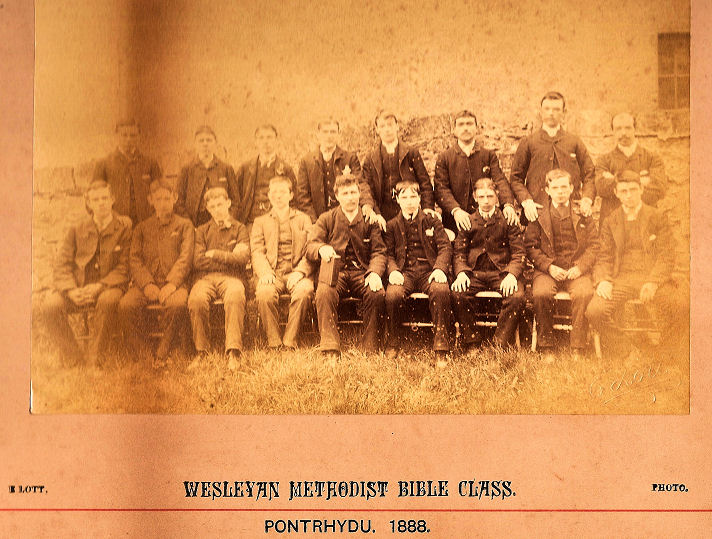
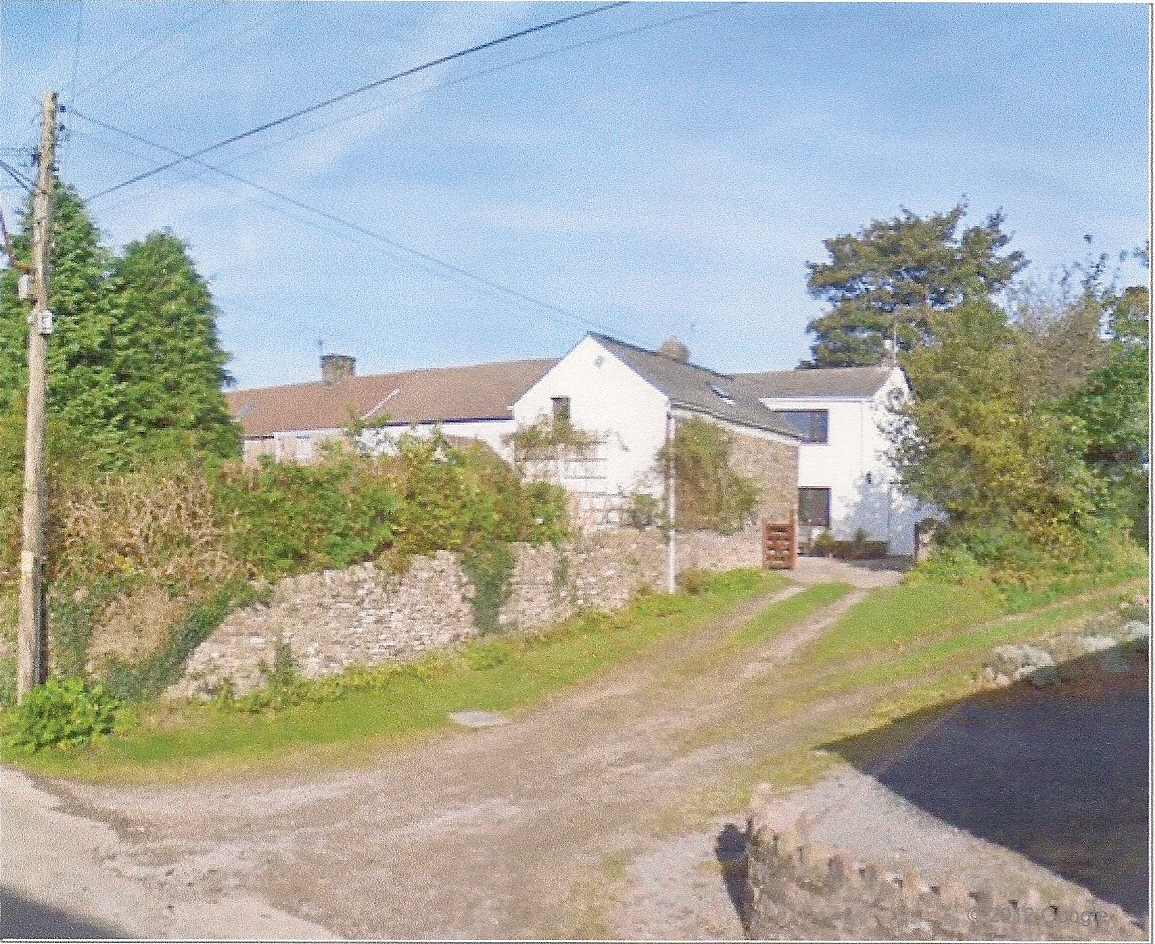
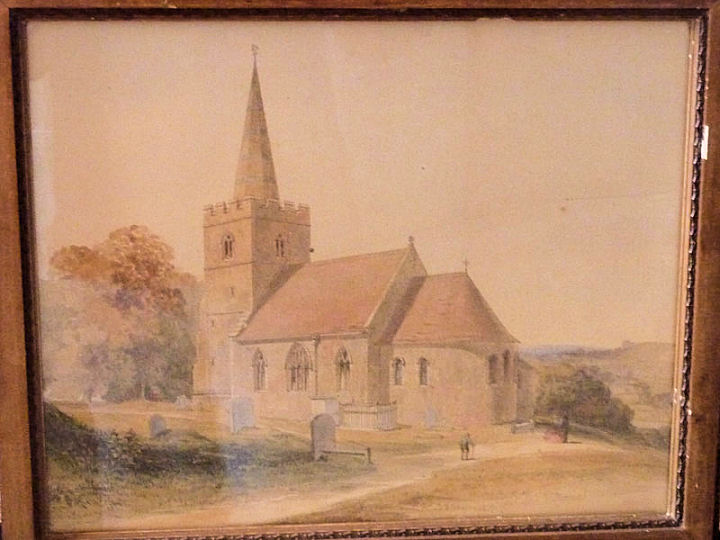
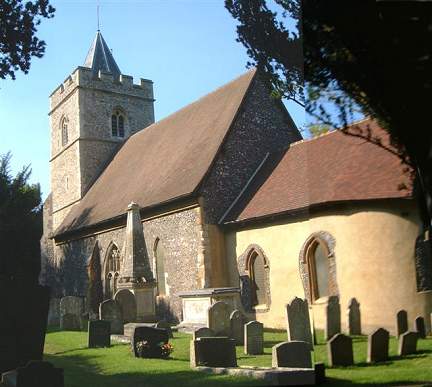
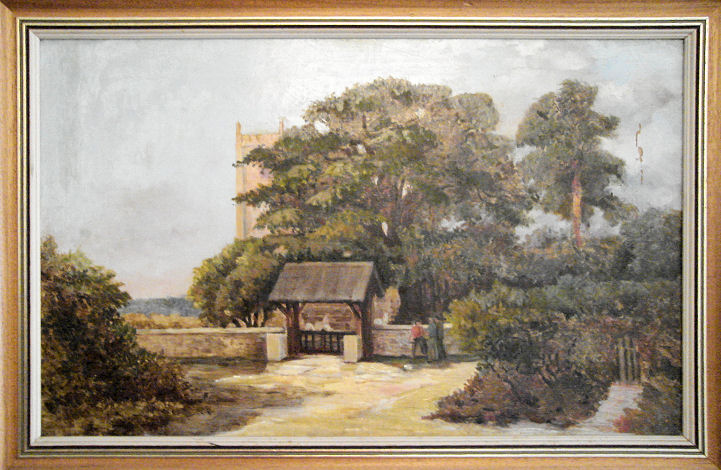
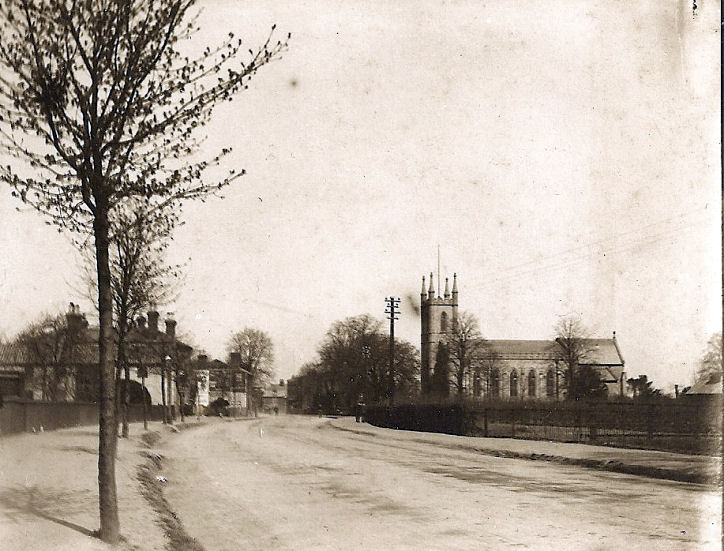
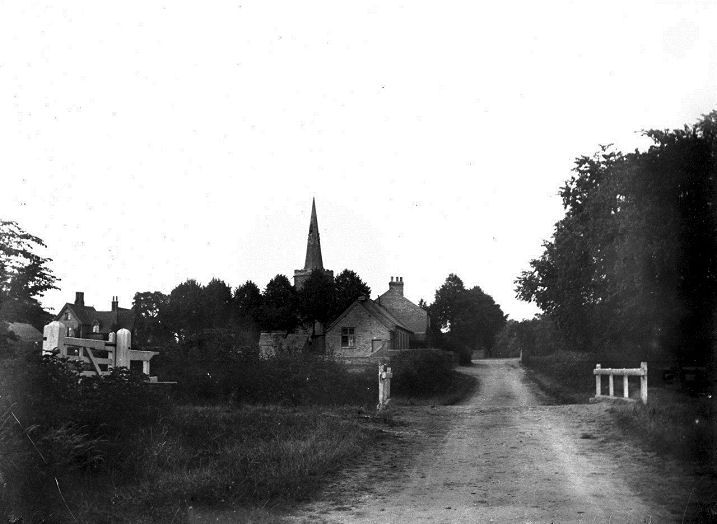
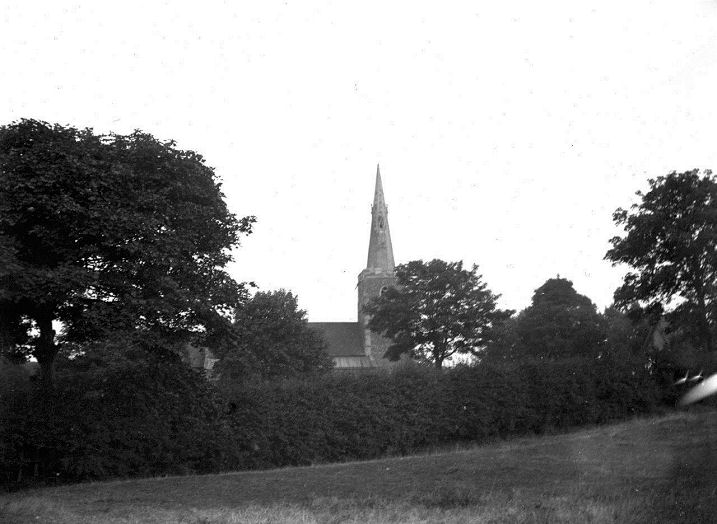
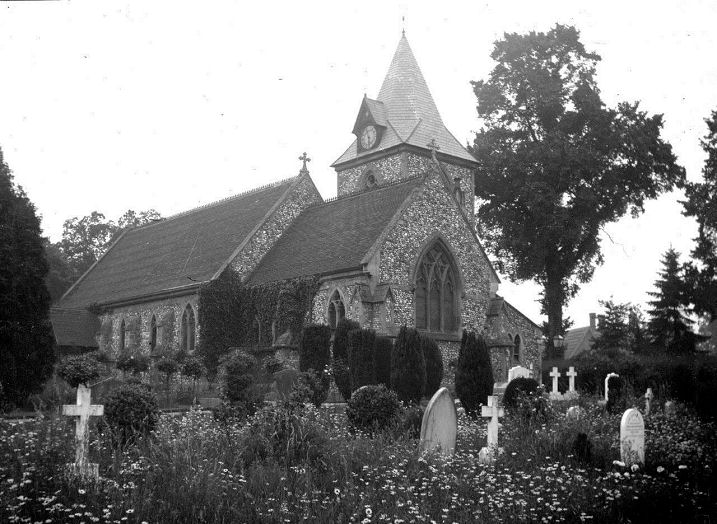
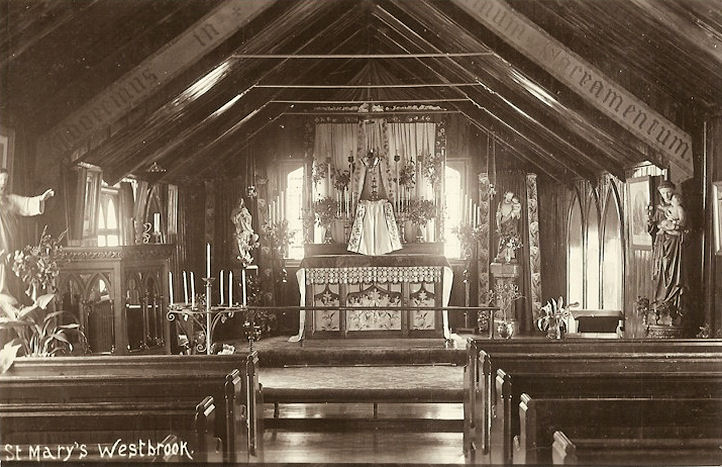
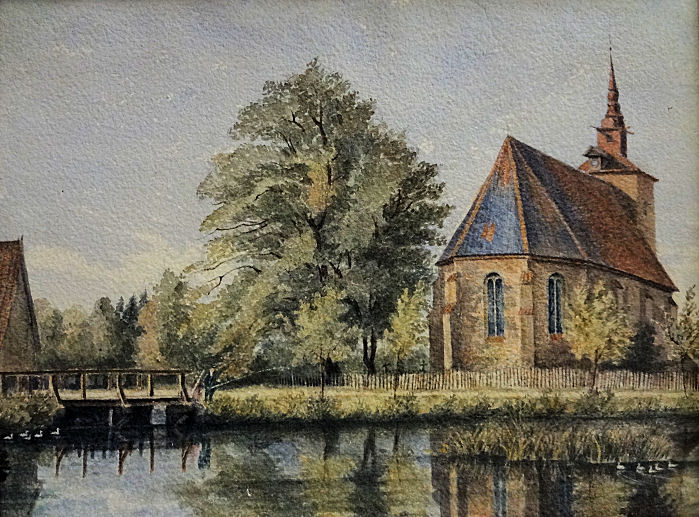
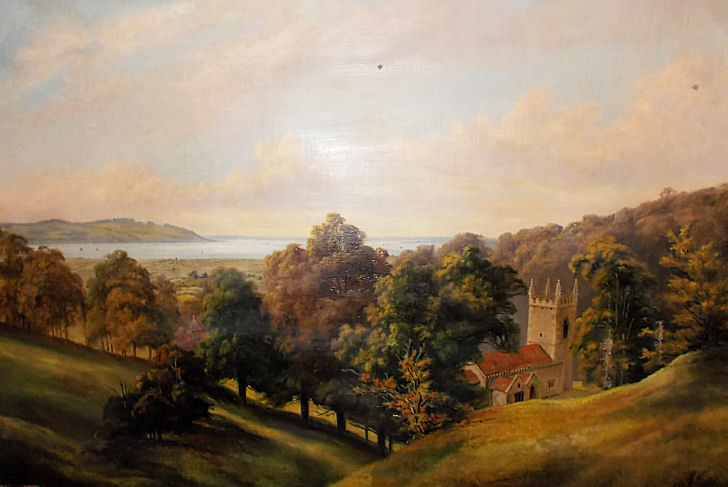
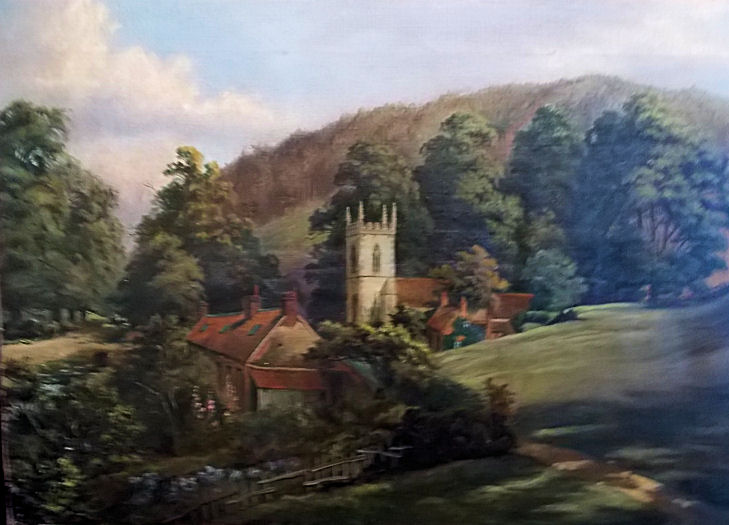
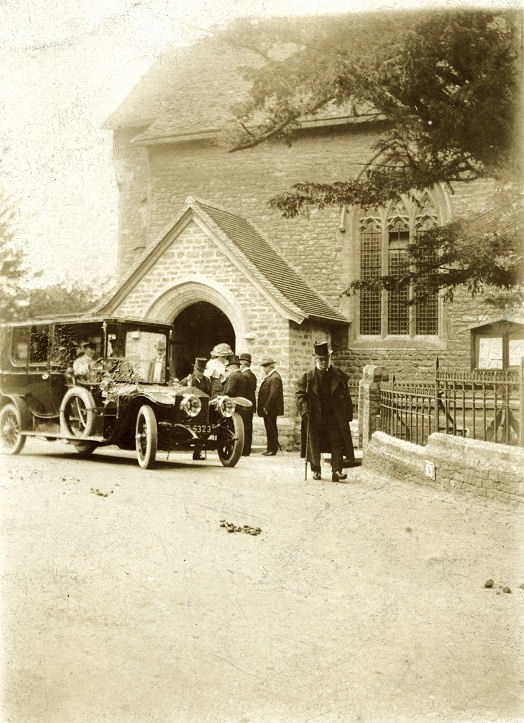
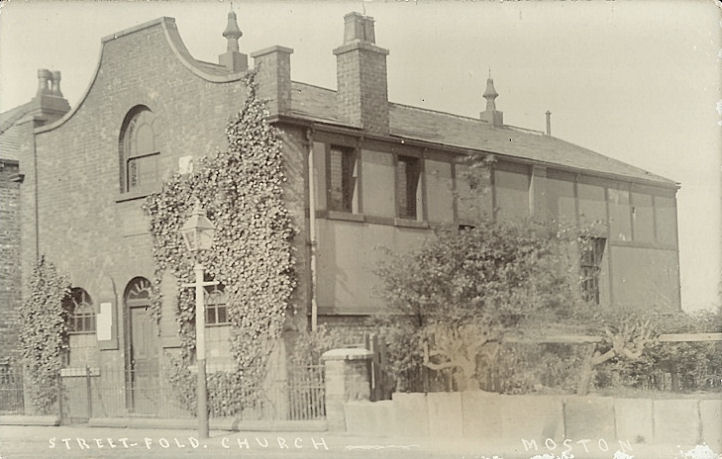
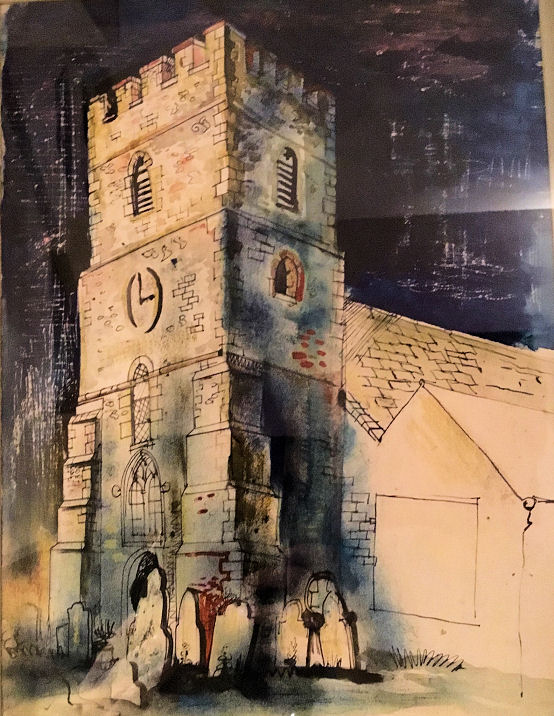
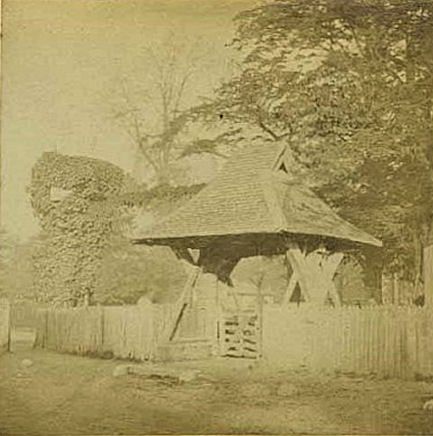
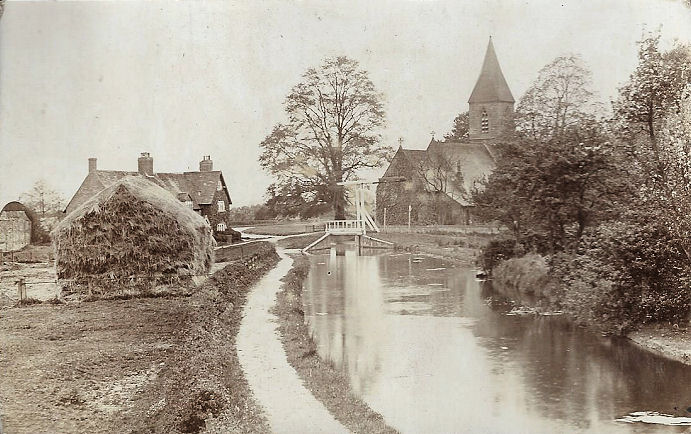
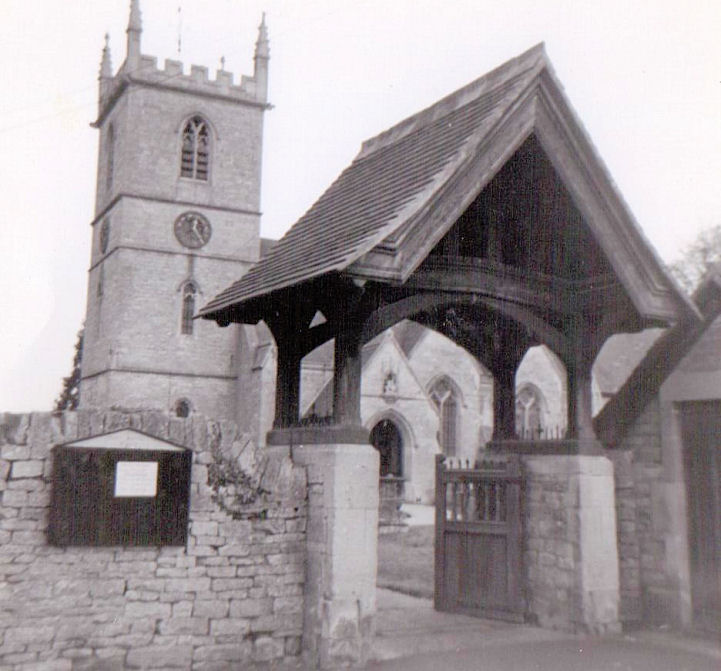
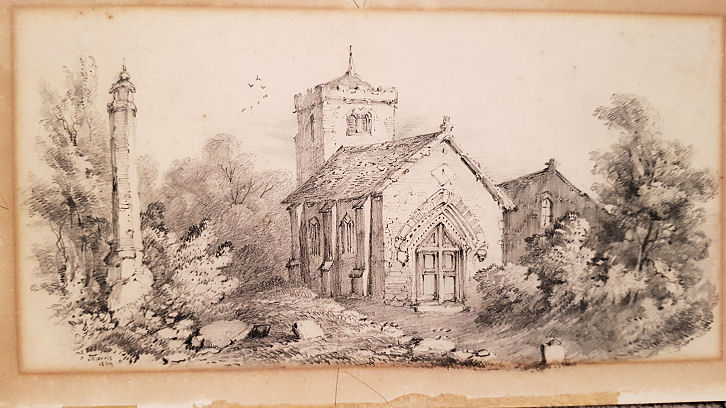
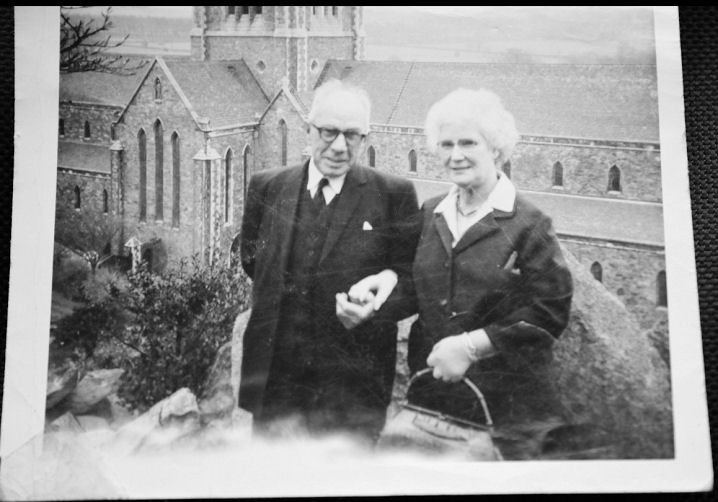
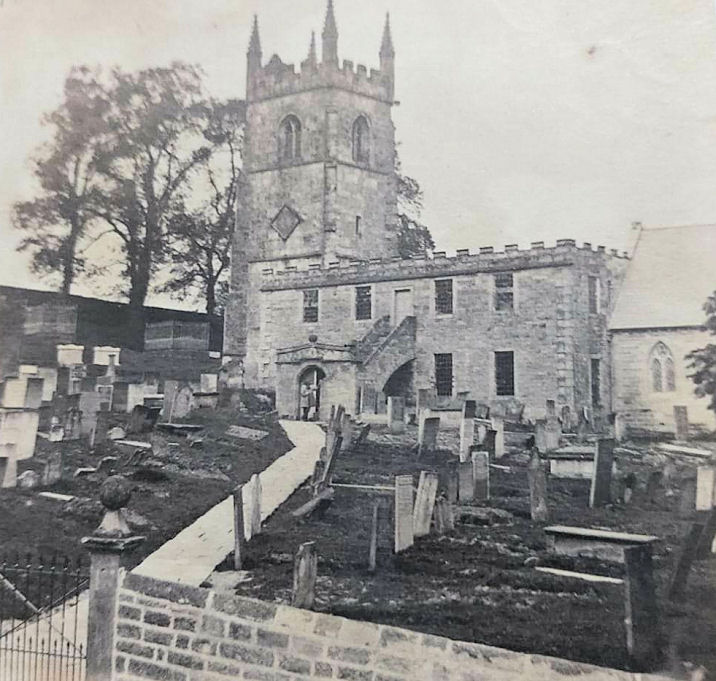
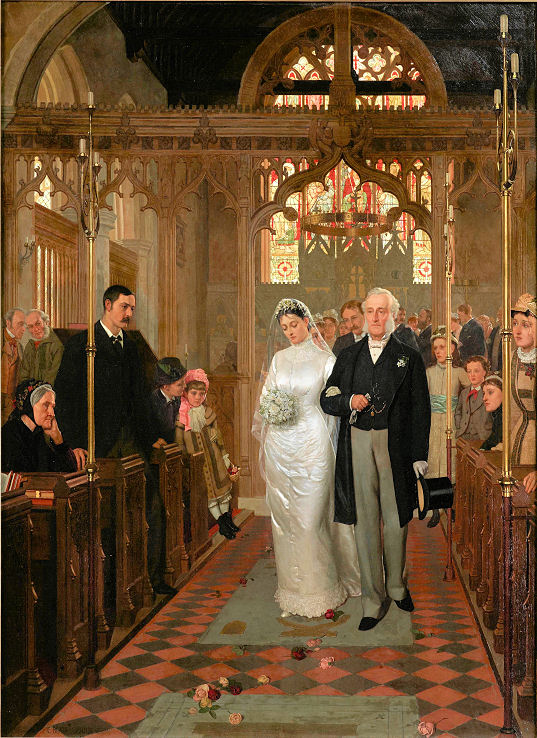
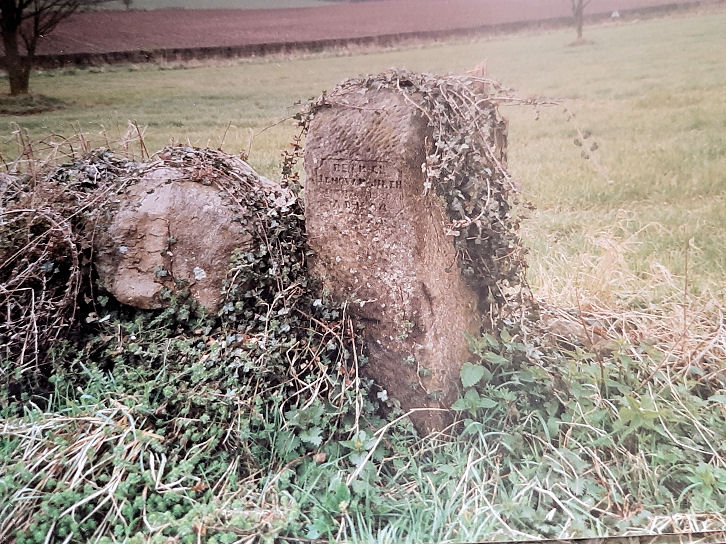
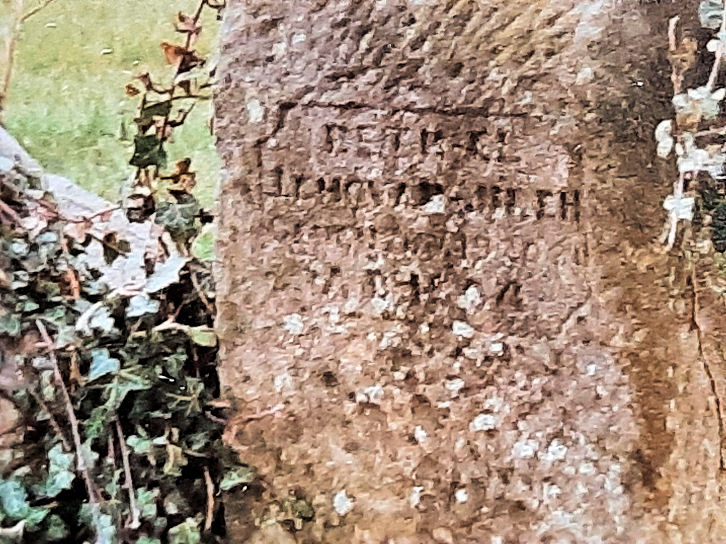
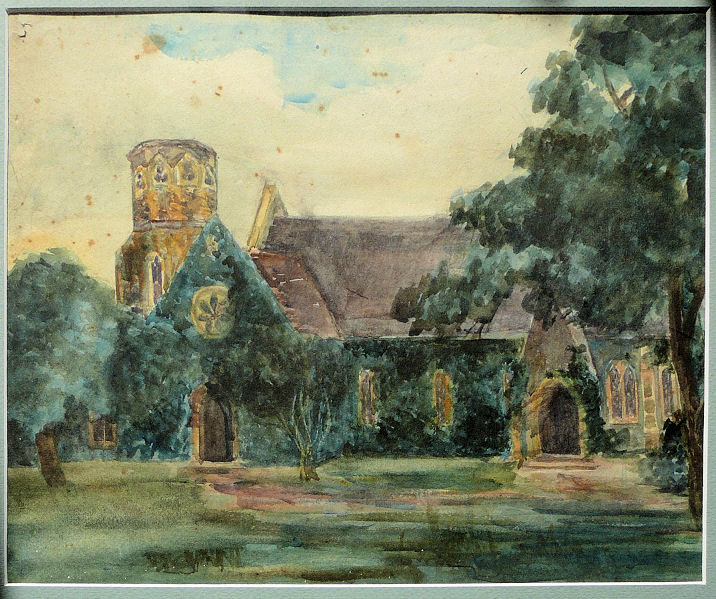
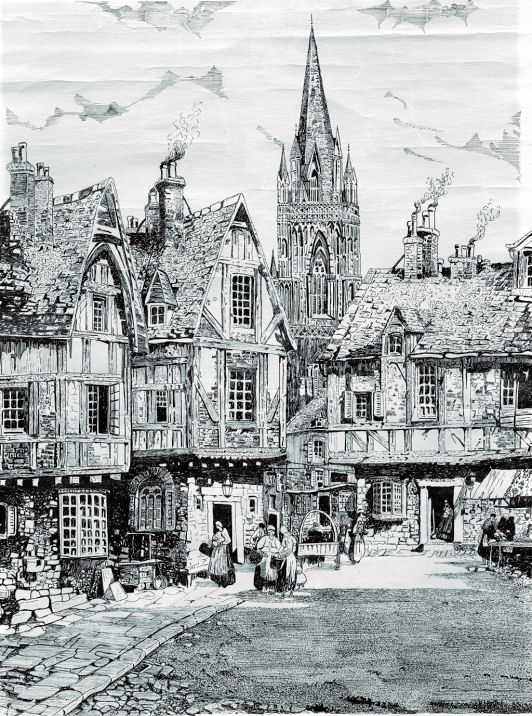
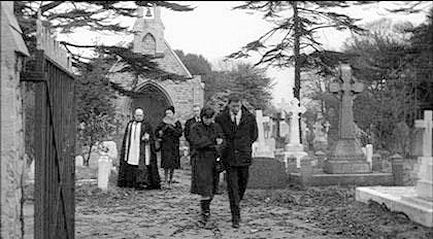
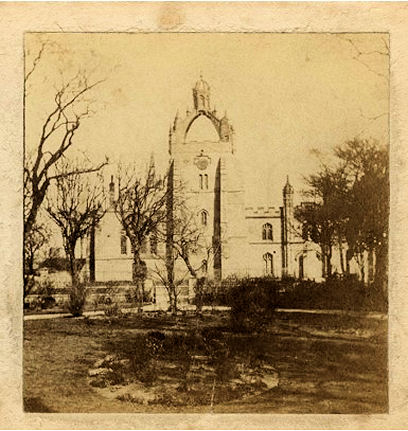
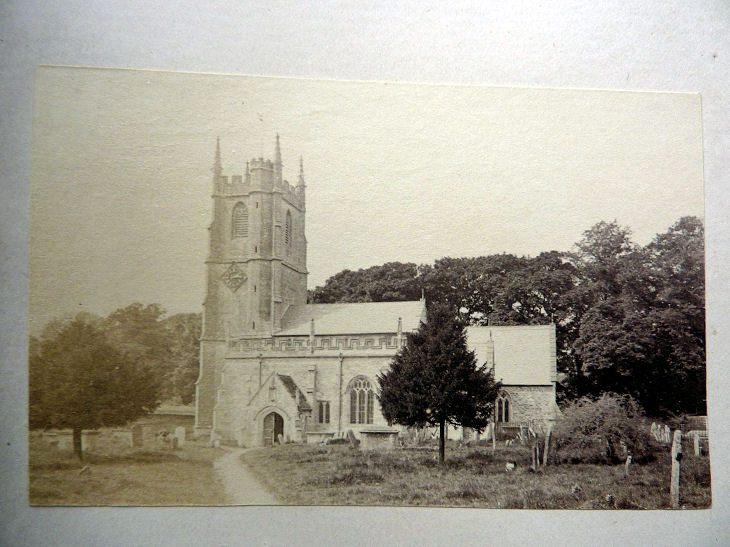
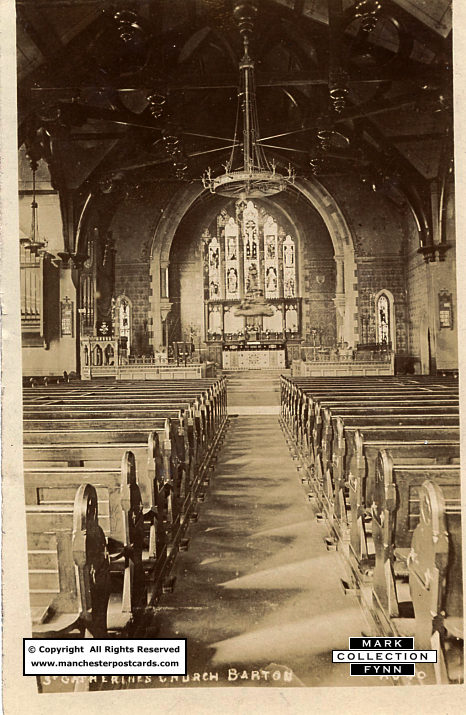
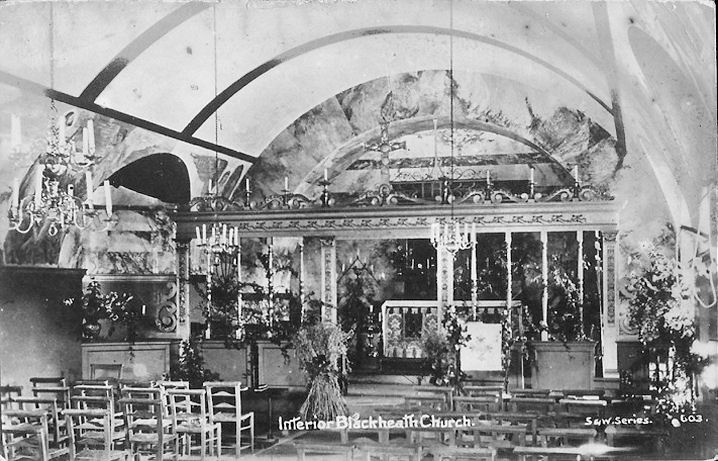
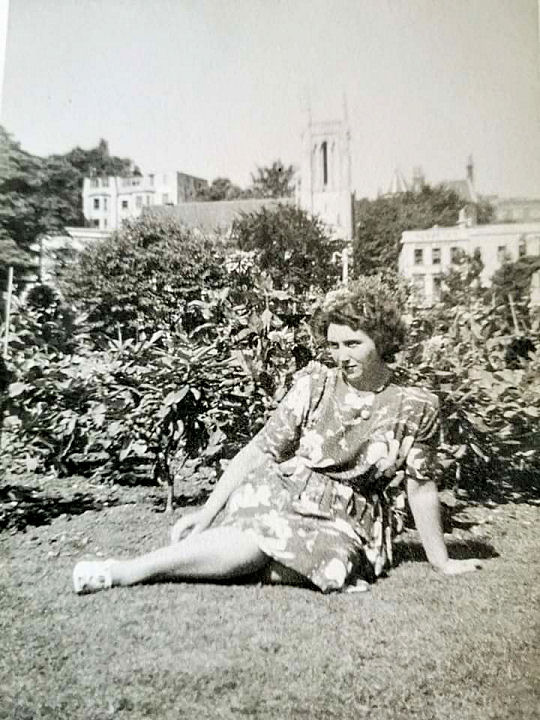
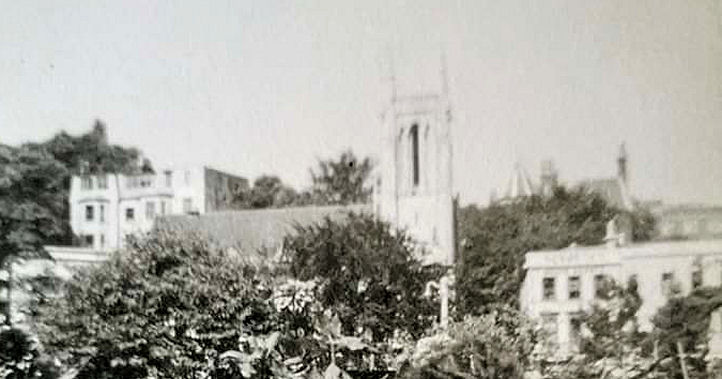
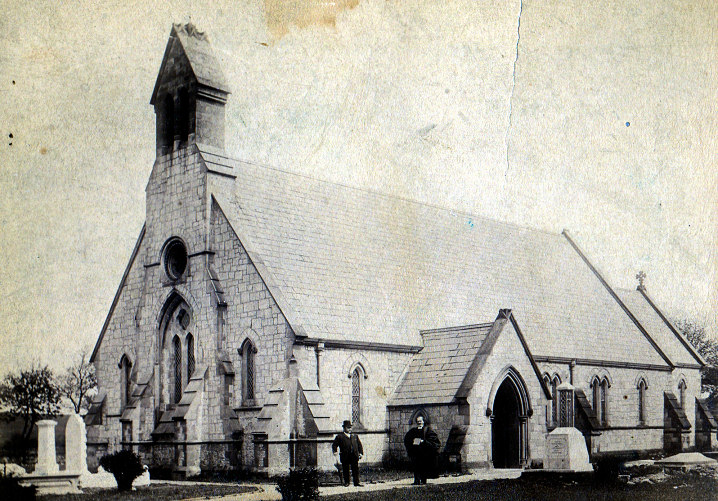
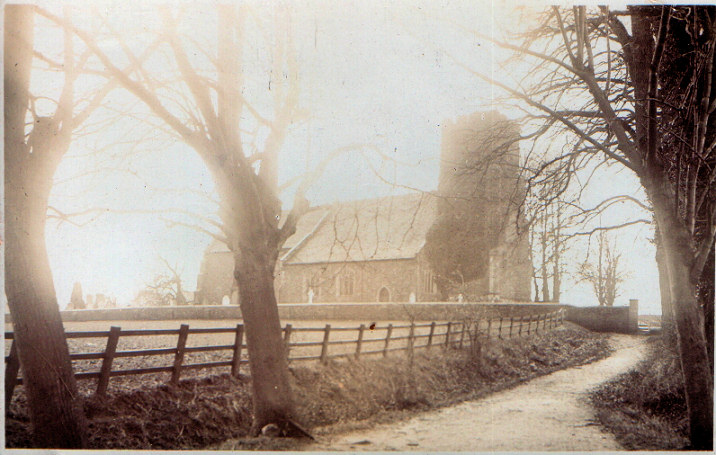
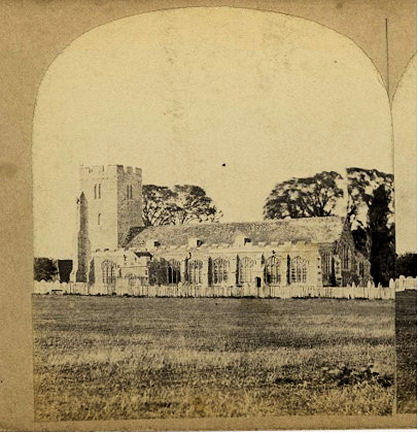
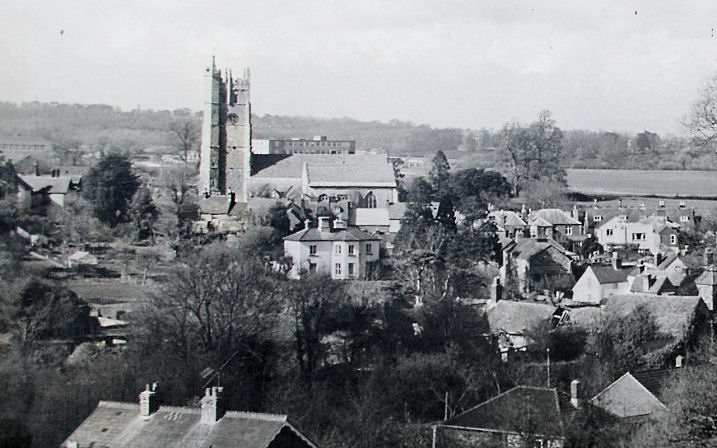
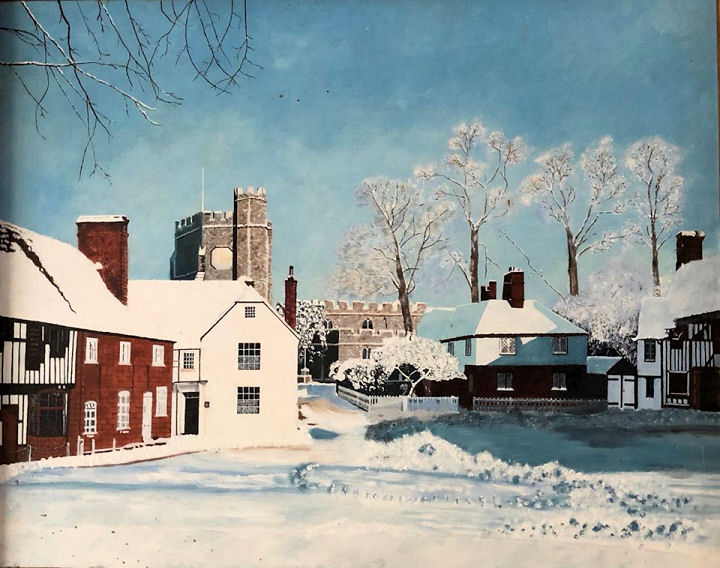
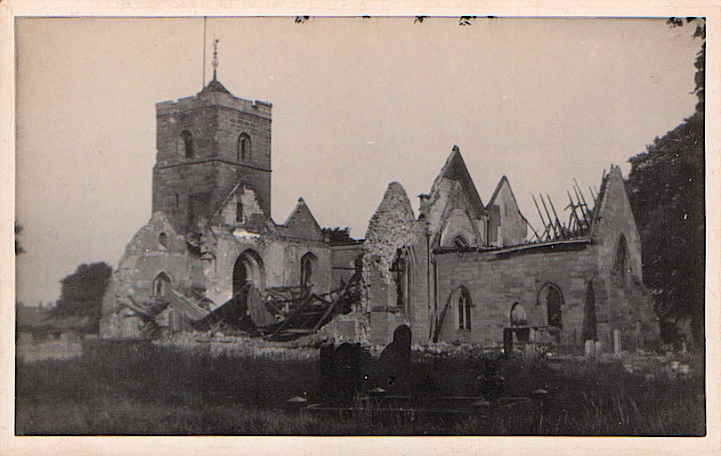
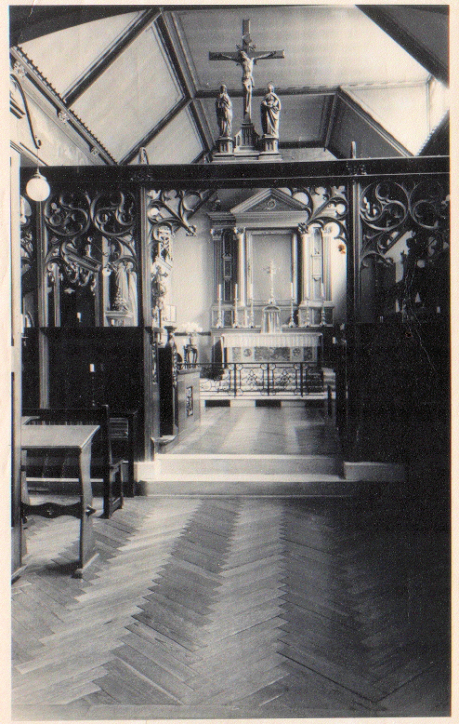
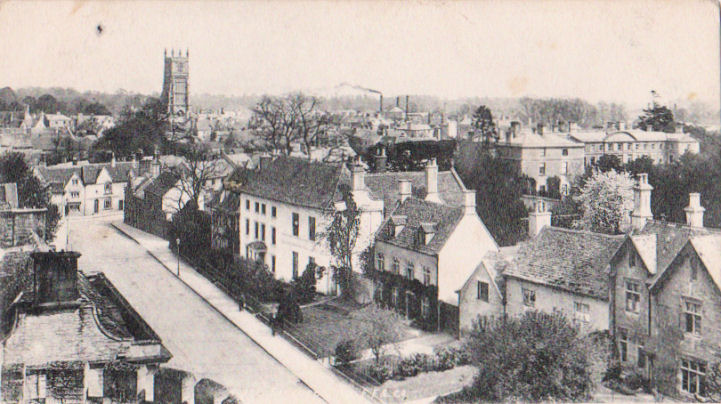
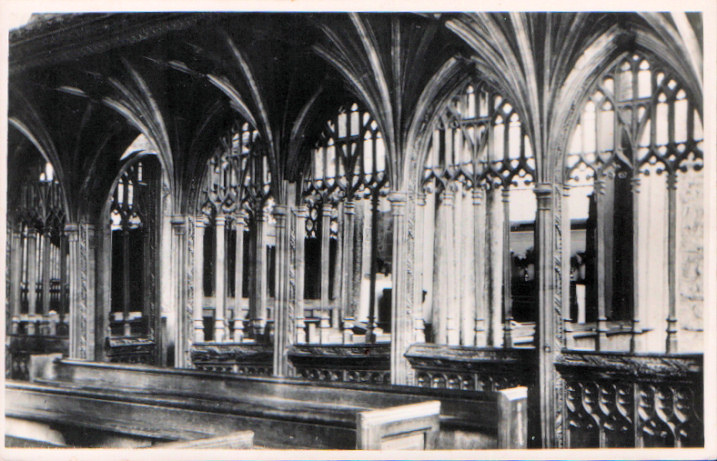
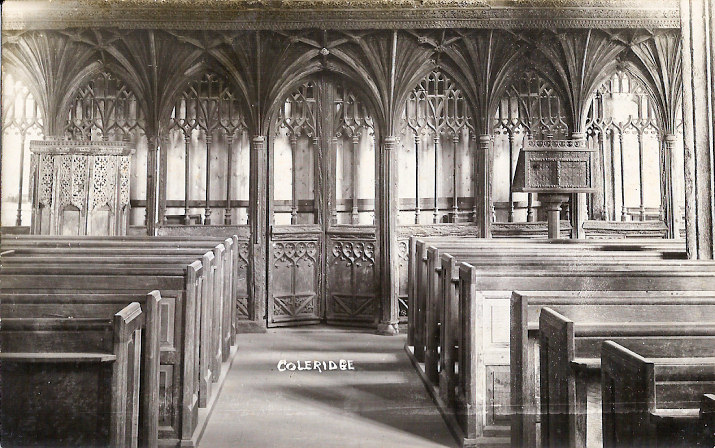
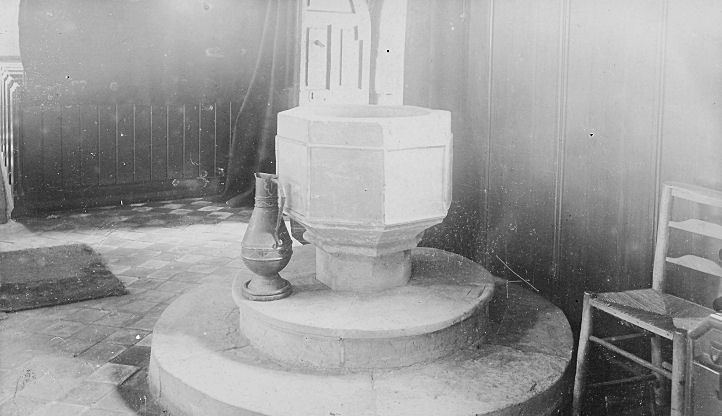
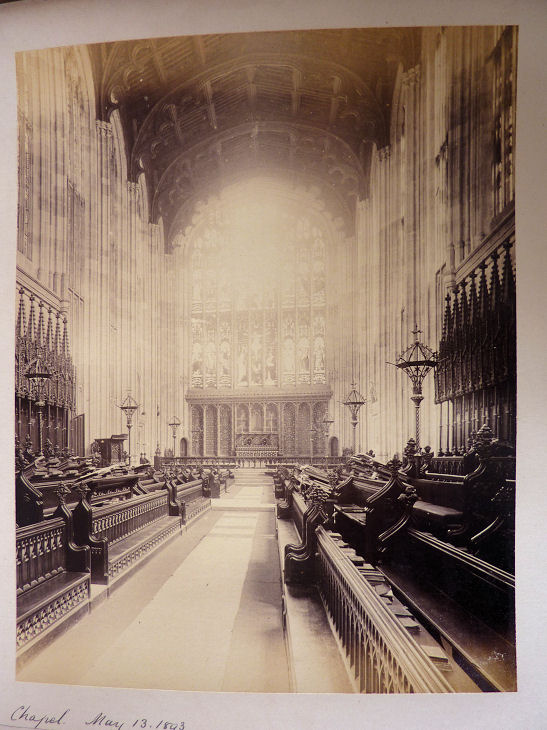
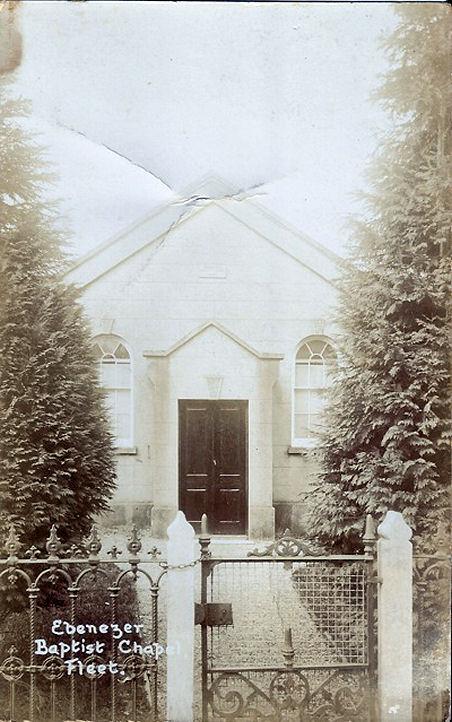
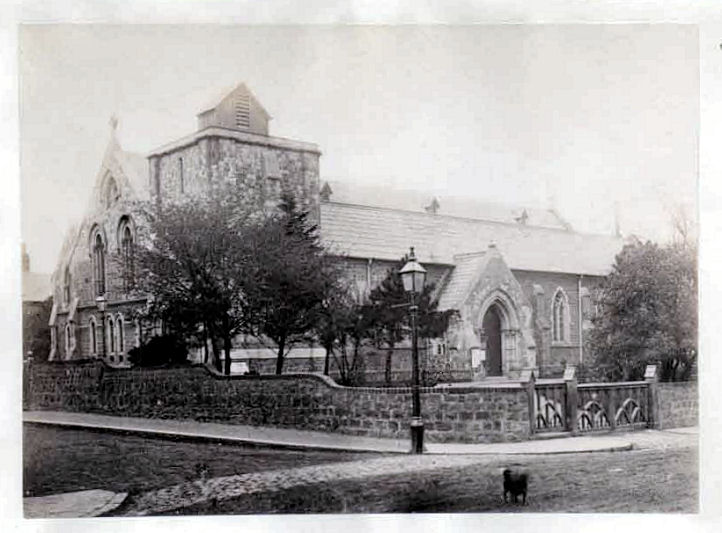
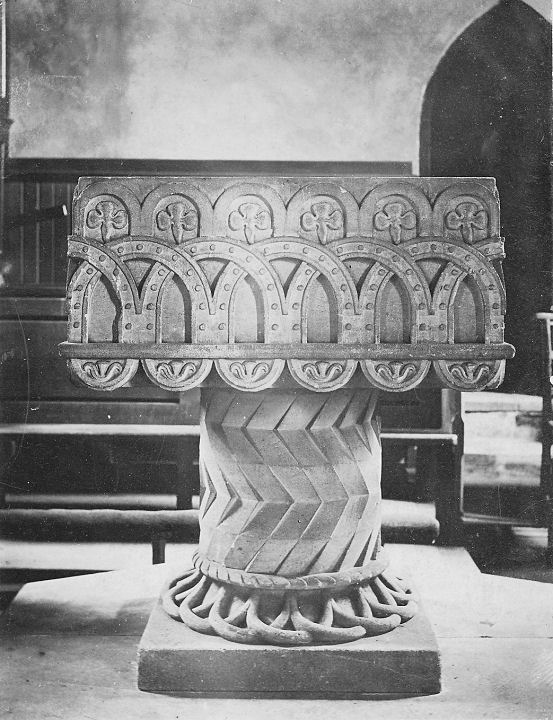
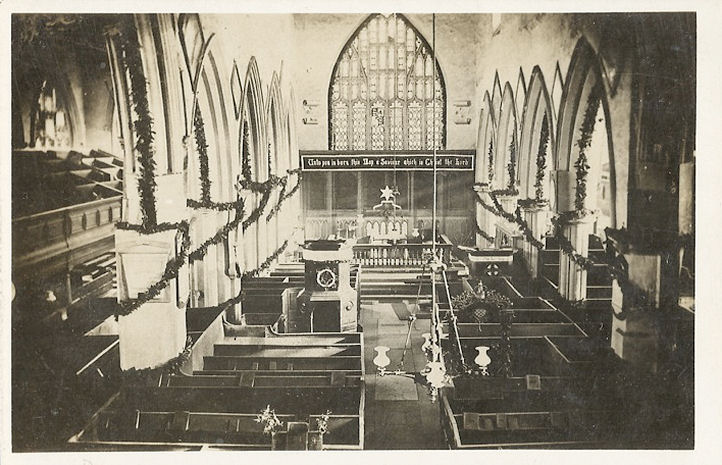
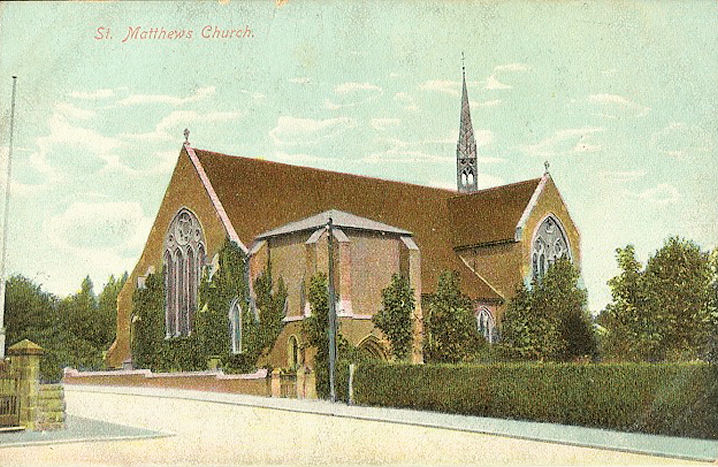
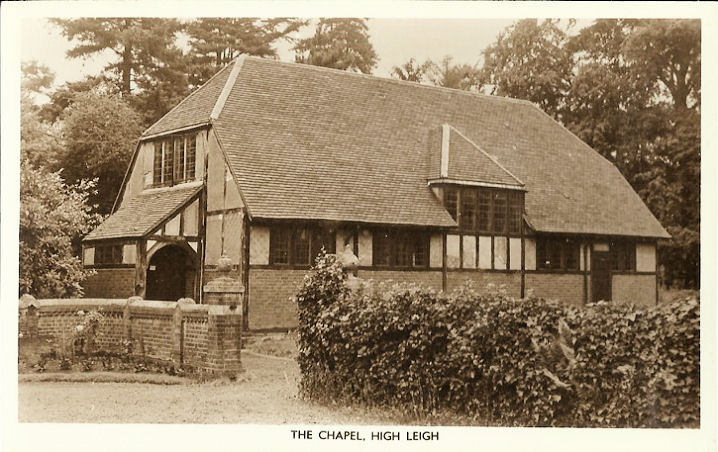
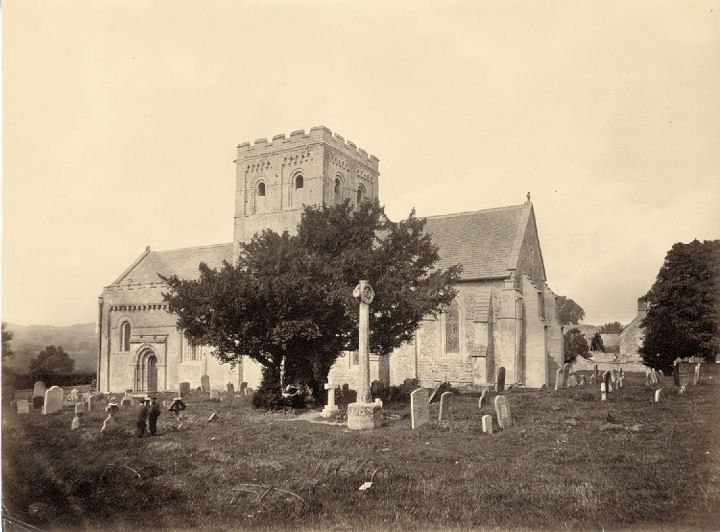
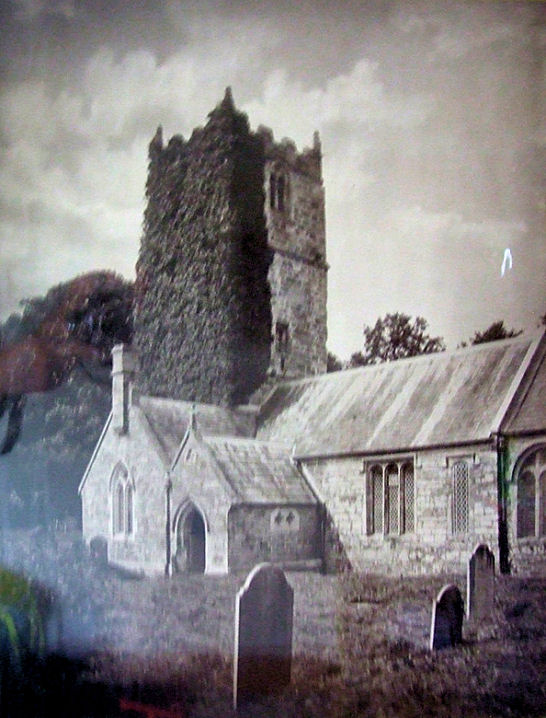
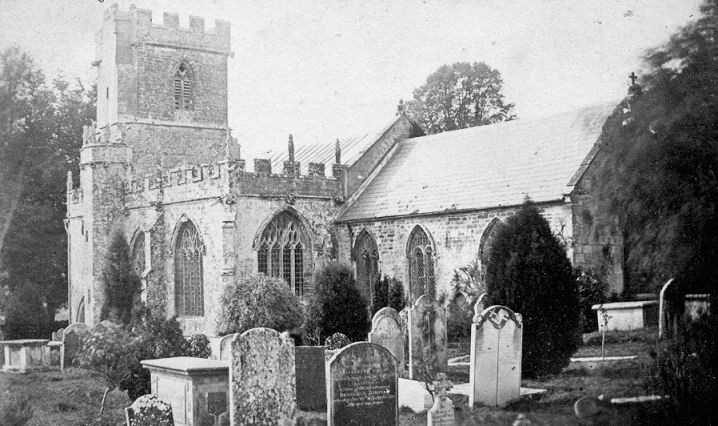
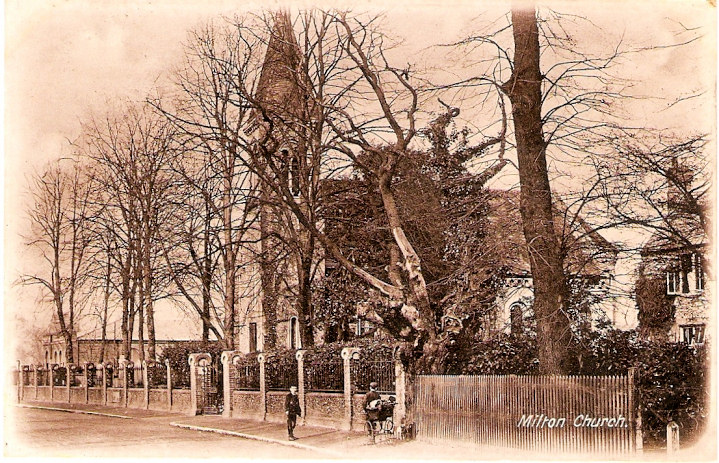
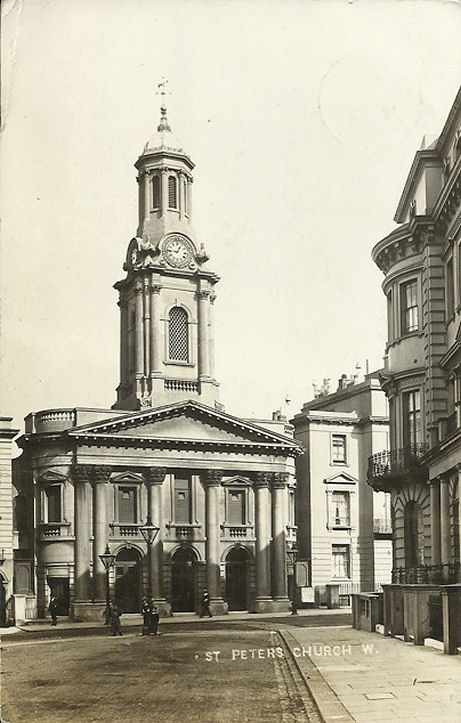
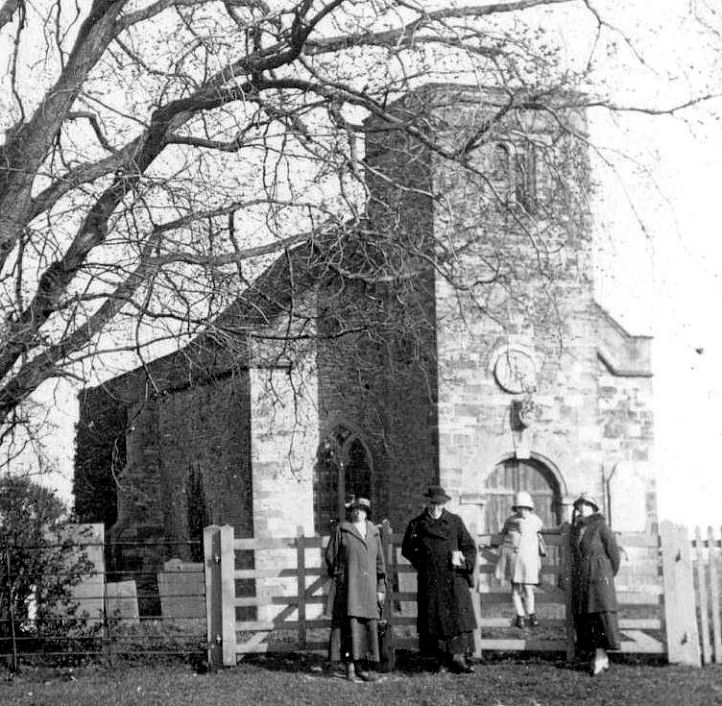
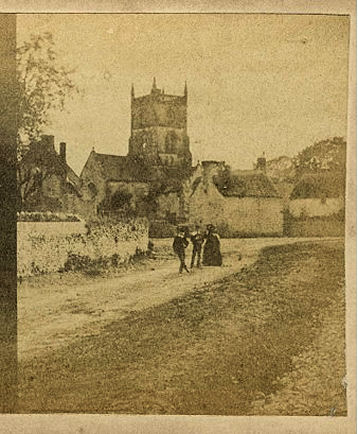
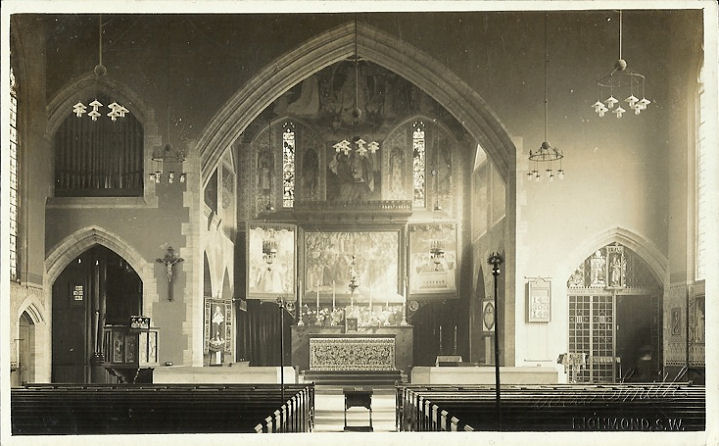
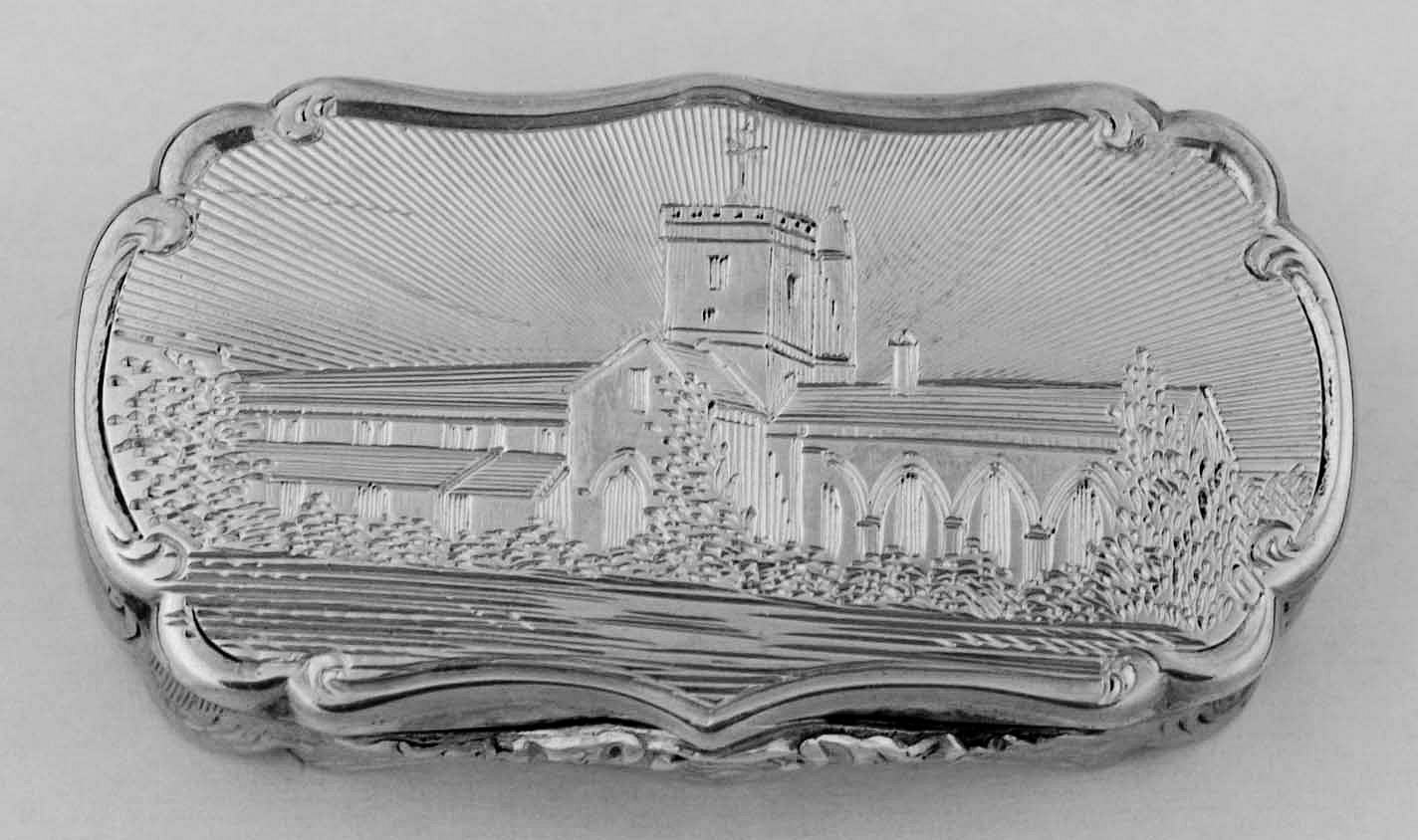
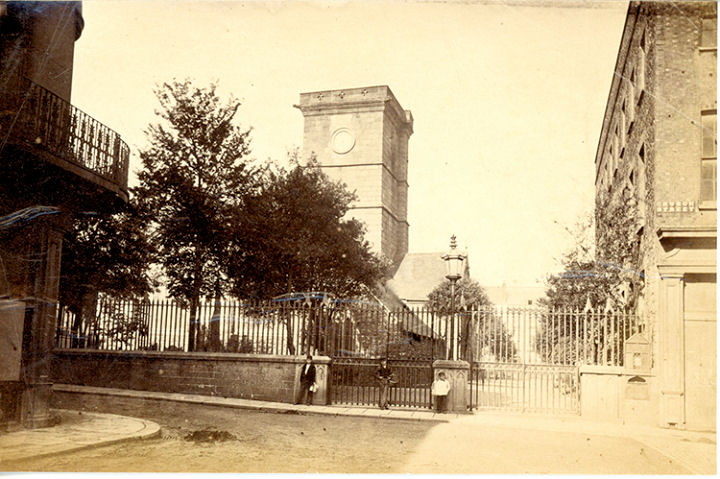
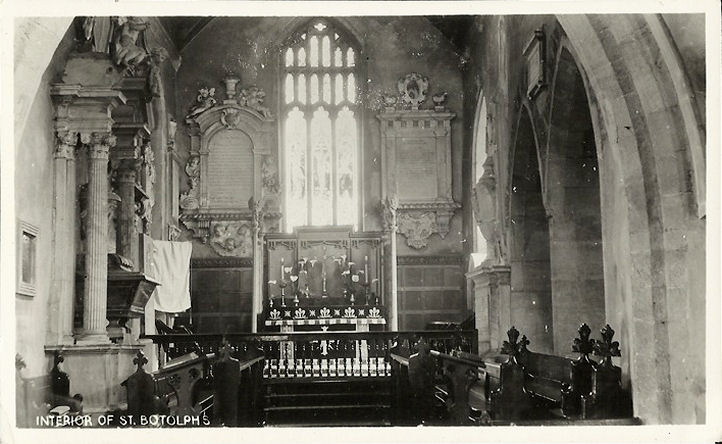
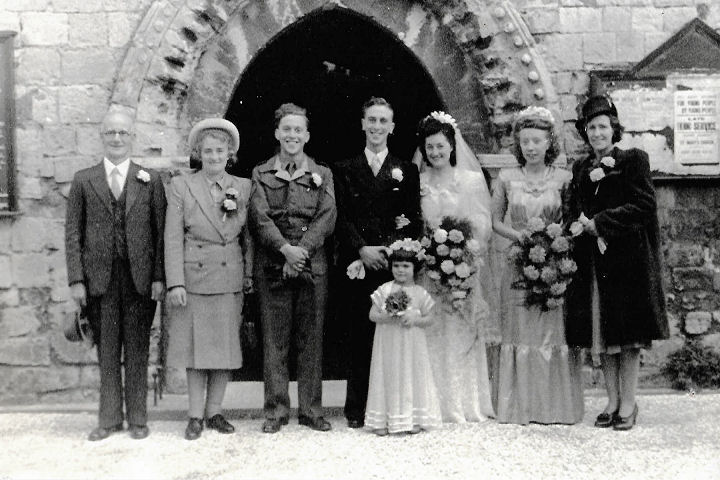
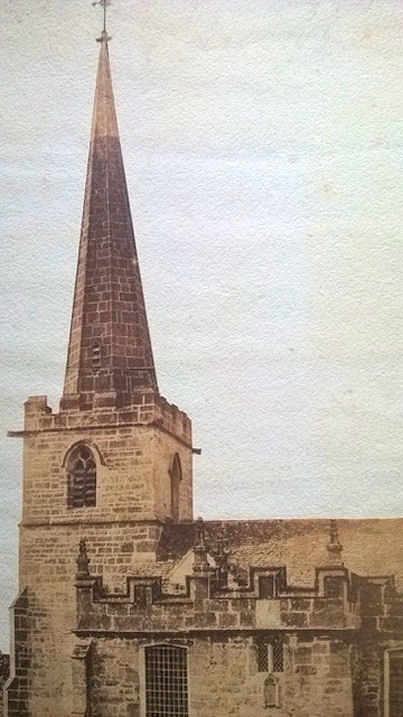
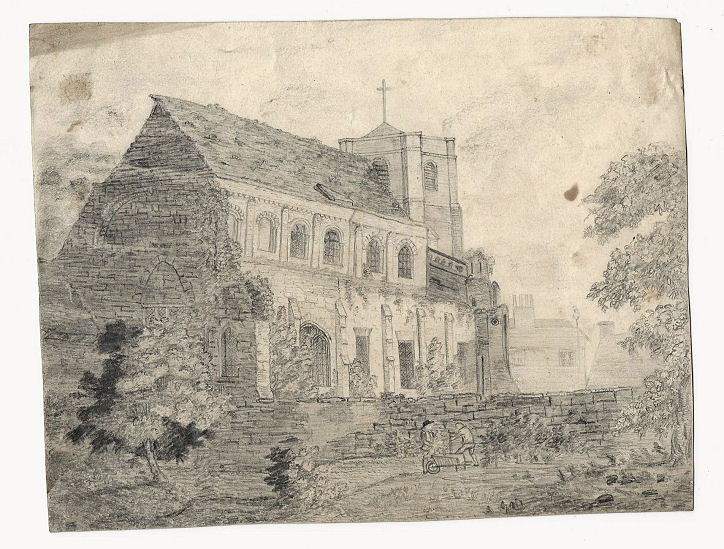
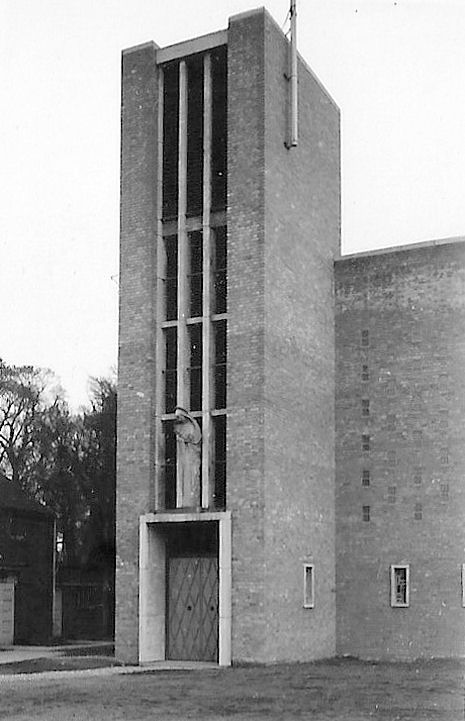
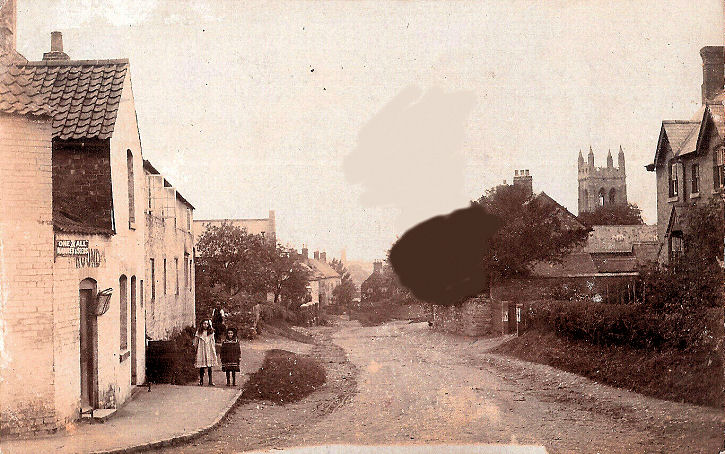
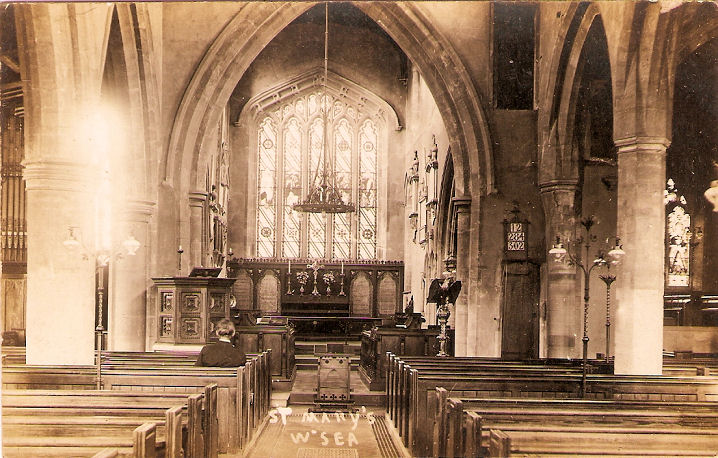
extreme left appear to be of three stories, and there has never been anything like this in Emley - perhaps it's time to cast the net wider! Another interior from Judy Flynn. Hand-written on the back is "Thornton Heath", and the postcard was also published there. Judy has found one church in Thornton Heath with an apse (St. Paul), but says it looks very different. Is this the right church, subsequently altered, or is it a different one? Howard Richter speculates that this could be the predecessor of the present Christ Church, on Sumner Road, at TQ 317 665. Visible on Google Earth, the present building incorporates part of the original 1852 building (at the left), and which now serves as the church hall. The church website gives some history, including the fact that the parts of the old church were only demolished in the later 1980's. Howard has also pointed out another possibility, this being a 19th century Congregational Church which stood on Campbell Road at TQ 316 670. It had been demolished no later than 1896. Another two fonts from John Bowdler. The first is clearly labelled as "The Old Celtic Font, Dryburgh Abbey", but John has searched for modern photos showing the font in situ, without success. So has the font been moved somewhere else? It does appear to have been moved, though it remains on the site - Jay Priest has found a photo of the font (labelled as basin) on this website, where there are many other photos of the Abbey. It appears to be no longer on the base in John's photo (though it seems unlikely that that base was the original). The second offers no clues. [Now solved, see Bosham, below]. Jonathan Gould has found an old photo of a group of young men, with the caption "Wesleyan Methodist Bible Class, Pontrhydu, 1888". The mystery is that neither he nor I can find any mention of a Pontrhydu on the internet. The photographer was Edwin Lott, of Nolton Studio, Bridgend, so that may serve as a clue. Can you advise where this church is or was?This one has generated a lot of discussion, which I will distil as follows - Simon Davies has offered Babell Welsh Wesleyan Methodist Chapel on Llan Road, LLangynwyd, where the main population centre is Pont Rhyd-y-cyff. He suggests that a local shortening of this to Pontrhydu would be entirely consistent with linguistic habits in Welsh. Mike Berrell has suggested Pont Rhyd-Ddu in Gwynedd, where a place of worship is shown here on Streetmap, though not on the OS map. Chris Willis has advised that this is Rhyd-Ddu Methodist Chapel which shows on the 1889 OS map as Methodist Chapel (Calvinistic), and that it does show on the current internet OS map, but only the ZoomMap version (where it is indicated by PW), but not on the Leisure map. Unfortunately, I can't see enough on GoogleEarth to decide whether the mystery photo is from here. Janet Gimber has discovered that Simon's Babell Chapel was Calvinistic Methodist at least until 1899, which would usually eliminate it from speculation. However, she has also found this reference and quotes from it as follows (I've corrected numerous obvious spelling errors produced by the automated scanning of the source) - the short section in bold is key - "The Wesleyans. The first start in connection with this denomination of Christians in the Parish was in a cottage in McGregor Row, in the year 1839. Services were held in this cottage for about two years, and conducted by local preachers, and occasionally by an ordained minister from Cardiff, in which circuit Maesteg was at that period. When the number of members reached ten, an effort was made to acquire a place for worship; and at a circuit meeting held at Llantwit, the matter was considered, but disallowed, as being contrary to the rules of the Wesleyan Conference. Subsequently, Bridgend and Cowbridge, with the surrounding villages, were constituted into a separate circuit, apart from that of Cardiff, and the little church at Maesteg was attended to by the ministers residing at Bridgend and Cowbridge, and the services held at the old Welsh Calvinistic Methodist Chapel, now the residence of the Rev. John Jones. For some reason the services were again discontinued in the Welsh Chapel, and the small band of worshippers held their meetings for some time at the old English Baptist Chapel, Galltcwm Row; in Shoemaker Row; in the Swan Club-room; and in the Old Works Infant Schoolroom. After these years of wandering, in the year 1857, the friends resolved upon building a small chapel. The plans and scheme were approved of at a quarterly meeting of the circuit at Bridgend, the Rev. Thomas Osborne (afterwards I. Osborne) presiding." So Babell remains a possibility. Janet also offers the one-time Independent Welsh Chapel (later named as Bethesda) in LLangynwyd. Currently for sale, the Estate Agents description and a photo are here. A screen capture from Streetview shows a wall which bears some resemblance to that in the mystery photo. Other suggestions. Colin Waters suggests Pontrhydyrun, which has a Baptist church, and again, the boundary wall is similar. Compare again with a screen capture from GoogleEarth. It would be useful to learn some history of this building to confirm or refute the suggestion. Matt Geldart has suggested Bethel Chapel at Pontrhydygroes, and a photo of which is available here. And Erik Appeldoorn has offered Pontrhydyrun Baptist Church on Chapel Lane, Cwmbran. See also the Wesleyan Methodist entry for Maesteg, which may be relevant. Henry Tribe is trying to place a church in an old watercolour. The combination of apse and prominent tombs should (if this is a realistic painting) make identification easier than some. Can you oblige him? John R. Parker has advised that the church bears many similarities (and some differences) to St. John the Baptist at Great Amwell in Hertfordshire. There is a photo on this website taken from a roughly similar position - see here for comparison. Are you familiar with the buildings restoration history? Or could artistic licence account for the differences? An old oil painting next, with an admittedly partial view of a church. In Marilyn Coetzee's family for over a century, it is presumed to have a link with one of her ancestors, who lived at Gringley-on-the-Hill (Notts.), Lincoln, Ashbourne (Derbyshire), Snelston (near Ashbourne), and Southwark (now Greater London). Another view. David Regan advises that he is reasonably certain that the painting is NOT in the Gringley area, which he has been exploring recently. He cannot rule out the Isle of Axholme a little further north, however. Another old postcard of a church interior, from Judy Flynn's collection. The only clue is the text on the front of the card - "C. A. C. Stoke". Brian Curtis has tentatively suggested that C. A. C. may stand for Catholic Apostolic Church, and his researches have shown that there were two in the Fenton area of Stoke. The first was built in 1879 on the corner of Bowstead Street and Church Street. This was replaced by a new church in 1896 on the corner of Whieldon Road and City Road. The first church was later used as a Gospel Hall. From old map evidence, both were still extant in 1937, but the whole area was redeveloped at some point, and neither building remains. Neither he or I have been able to find any photos of either church (interior or exterior), so the suggestion must remain unproved for the moment. Alistair Moffatt has an old photo of a church, probably in England, which he suspects probably dates from 1890-1910. A couple of interiors from Steve Bulman's Collection now. The first was evidently taken at Christmastime, the second is a very plain chapel; neither offer any clues whatsoever. Alan Regin has asked for help in identifying two, or possibly three churches. Taken by Charles Cole, a bell-ringer, who died in the 1940's. There are nearly three hundred church images, but only these remain unidentified, which Alan believes were taken circa 1912. The identified churches have a wide geographical scatter, but mostly from the southern half of England. What is possibly one church is shown on two photos - 1, 2, though neither shows the building very well. It reminds me of churches in Northamptonshire or Oxfordshire. [Solved - see Longstanton, Cambridgeshire, below]. The other is shown very well, and seems to have flint walls, so S.E. England perhaps? [This latter church is now solved too - see Northwood, Middlesex, Holy Trinity, below]. Some more postcards from Judy Flynn. This interior is labelled as Compton. There are many Compton's scattered around the country; Judy is fairly sure that this isn't the one in Surrey. [Now solved - see Compton, Hampshire, below]. Next, the interior of what seems to be a wooden church, which was posted in 1902 from Church Stretton in Shropshire. If indeed wooden, then the church may possibly no longer exist. John Williams has tentatively suggested St. Catherine by the Sea at Holworth in Dorset, before the Millenium window was installed. Unfortunately, all of the photos I've been able to find on-line post-date the installation. An old postcard interior from Judy Flynn's collection. Having discounted the Suffolk and Yorkshire Hepworth's, Judy suggested that Hepworth might have been the publisher instead, leaving Church Kirk as the only clue. I managed to discover that Church Kirk was an alternative name for the location of St. James at Hyndburn (now a suburb of Accrington) in Lancashire, however I can't find any interior photos. The description here is at least consistent. Can you confirm or refute my suggestion? Janet Gimber has confirmed my suggestion, and pointed me to the Grade II* listing, which includes a photo of the East window. Mike Chester has also advised of the Wikipedia entry, which, although lacking a photo of the interior, has a description of it, again consistent with the postcard. Mike also advised that the church is currently (2018) for sale, and the estate agents notice includes some interior photos, providing a final confirmation of the postcards identity. Kate Burhouse recently came into possession of a watercolour, showing a river or canal scene. There is a church (or possibly a castle) in the distance. Can you identify the location? Another of Judy Flynn's postcards - an interior labelled St. Mary's, Westbrook, which has a catholic feel. On the rear in pencil is Berks, near Newbury. An old OS map of the 1985 vintage show a chapel at Westbrook near Boxford in Berkshire, presumably now closed. Circa SU 426 716. Can you confirm whether the interior and the chapel on the map are of the same building, and supply a little history? Brian Curtis has been in touch to say that he has consulted a number of old OS maps, and all show this chapel as Methodist, which the Victoria County History confirms (see here). He agrees that the postcard shows a catholic chapel (or at any rate, NOT Methodist). He has also provided a link to show the building on Google Earth here, evidently converted to residential use. So, not Westbrook, Berkshire. There is also a Westbrook in Kent, and there may well be more. Mindy Wright has a family painting of a church, dated 1834. If the church still exists, it should be easily recognizable, as its position by a pond or river, and its tower, are distinctive. [Now solved - see Stellichte, Germany, below] Andy Pyatt has two paintings of the same church - 1, 2, both signed and dated J. Oliver Harris, 1899. He was born in Shropshire and died in Lichfield, and is known to have painted in North Wales, and in the Lichfield area. Can you identify the location? [Andy - I can't find your original email to reply to. The suggestion has been made that the church in question is All Saints at Brantingham, East Yorkshire. I think it's as close to certainty as one can get with a painting. Note in particular the stair turret to the left of the porch, and compare with a photo from this website - http://churches-uk-ireland.org/images/e_york/brantingham2.jpg] A family wedding photo from Tina Snuggs. Tina is keen to find out the location of the church as it may help to name the people getting married. The family mostly lived in Chelsea and Wandsworth at the time, though of course it may be elsewhere. Based on the model of the Rolls Royce, Tina dates the photo to 1907 or later. Another old postcard from Judy Flynn. Labelled as Street-Fold Church, Moston, which probably places it in Greater Manchester. [Now solved, update to follow]. Jacob Boston is keen to find the location of a church in a painting. At first glance it has few obviously useful features, though the clasping buttresses will help. [Now solved - see Sturry below]. Three more from Jan Bradley's old stereoview slides. The first if of a rather fine lych-gate; next a church, which as Jan says, may not even be British [now solved, see Paris, below], and the third has the look of the West country to me [now solved, see Marlborough, below]. Brian Curtis has proposed St. Margaret's at Hooley in Surrey as a candidate for the lych-gate. Certainly a modern Streetview is supportive of the identification. However, muddying the waters is Jay Priest's suggestion of St. George at Beckenham (Streetview). Toby Lott is trying to identify the location of a church in a painting (large pdf file) by John Constable. Titled "On the River Stour", it's known to have been painted in the first two decades of the 19th century, and during this period Constable is known to have been painting in Suffolk, Kent, Dorset, Warwickshire, and in the Lake District. It is possibly a commission by the Rev. Thomas Fisher or Samuel Peach. The rivers name is of little help as there are several in England, and I've been able to find Stour's in all of the possible counties, except for the Lake District. The church itself, if painted accurately, has (or had) a circular stairway ending above the level of the top of the tower. Can you provide Toby with a location for this painting? An old photo now of a church, possibly in Kent. Can you identify it for Geoffrey Tucker? Andrew Woodyatt has an interest in old cinema's. Here is a photo is one such, and he believes that it may have been a Methodist building of some sort, but he doesn't know where the building is (or was). Can you advise? A lovely old photo of a church beside a river or canal, with a lift bridge. The bridge may have gone, as indeed may have the canal if such it is, but can you identify the location for Ken Partridge? [Now solved, update to follow]. Another old family photo, from David Haworth. Found among his dad's photo collection, this church was obviously important to him, and David would like to establish where it is. The most notable thing is the gate standing on stone piers, with a small building immediately next to it. It may possibly be in the north-west of England, or North Wales. David has identified this through his own efforts, and it's St. Martin at Bladon, Woodstock, Oxfordshire. Jeremy Speechley is looking for help in identifying a church in an old drawing dated 1869. As he says, perhaps the most useful clue is the hexagonal memorial column. There is a signature at the bottom left - perhaps Morris. Philip Hughes has a photo of his grandparents, taken in 1965, and is keen to find out where they were. The church behind is obviously rather a large one, and its situation is fairly unusual, being so close to a cliff or steep bank. [Now solved, update to follow]. Linda Ibbotson is looking for help to identify a church in an old family photograph. It was possibly taken in the area around Slamannan or Muiravonside, and to my eye has the look of Non-Conformity. A mystery church which has been on a Facebook page for quite some time, but it has remained unidentified, so Hannah Chandler is asking for help here. It's a most distinctive church, with a feature I've never seen before - a porch with a set of stairs (like a half bridge) up to the church entrance on the first floor. And what's the building to its right, another church? I've tried numerous combinations of search terms on Google, but have drawn a blank. Perhaps it's not in the UK, but it looks as if it should be! [Now solved, see Matlock, Derbyshire, below]. Rosie Jarvie is asking for help in identifying the interior of a church in a painting "Till Death Do Us Part" by Edmund Blair Leighton. Painted in 1878, it's evidently in a Gothic Revival church, and probably in London. I've lightened the image somewhat to bring up more detail. In case it was painted close to his home, it may help to know that he was living in Pembridge Place (near Westbourne Grove) at the time. Margaret Heselton has been sorting through a late friend's photo collection, and would like help identifying where this photo was taken. A benchmark can be seen near the bottom, with some text higher up (close-up). It appears to read BETHEL JEHOVAH JIREH......1920..... implying a demolished chapel. Other identified photos were taken in Cornwall, Devon, and the Elan Valley in Wales. An Irish connection is also possible. Jay Priest has suggested that the text reads BETHEL JEHOVAH JILEH SEPT 17 18 19 20 21, AD 1904., possibly suggesting that the meeting(s) were held in the field on those dates, so no chapel should be expected. They may have been connected with the Welsh Revival of 1904-5. Another family painting, of a distinctive church. Christina Mitchell has asked for help in identifying it. Painted by an artist called Elsie Dixon, it's believed to be about 120 years old. Terry Foster owns a fine pen and ink drawing of half-timbered buildings and a church or cathedral, drawn by his late father. It was drawn from a postcard in the 1950's, and Terry would like to find out where the buildings are. This query has been transferred back from the long-term unsolved page, because it's now been solved by Jay Priest. Greg Mishevski was interested in the location for a scene in the film "Girl in the Headlines" (1963), which shows a cemetery chapel. He's provided two stills - 1, 2. Jay has identified it as the chapel in Barnes Cemetery in Greater London, and had provided this confirmatory link. A mystery from this website now. While revising the Carmarthenshire page I was unable to locate what was listed as Carmel Chapel under Garnant. The grid reference provided by the late Mike Berrell was for the very different Calfaria Chapel. My appreciation to Janet Gimber for identifying it as Carmel Chapel in the nearby Gwaun-cae-Gurwen in Neath Port Talbot, to where the entry has now been moved. There are also two problem entries on the Glanaman page, the Capel Bethel and Independent Chapels. The Independent Chapel has been identified as Bethel at Cynghordy, by Janet Gimber. Recently Solved (Older solved Unknown's have been archived here). Aberdeen, Aberdeen City, King's College Chapel on High Street. Jan Bradley had sent me some scans of old stereoviews. This one was identified by Phil Draper. Phil was able to date one of the others as being of pre-1873 vintage, so this one is probably of a similar date. Link. Ardington, Oxfordshire, Holy Trinity. Alyson Griffin had wanted to identify the church in a watercolour. The family has ties to Berkshire, Buckinghamshire, Bedfordshire and Hertfordshire, though of course it could be elsewhere. Perhaps diagnostic might be the triangular feature at the top of the tower - possibly a trefoil opening for the sound of the bells. Janet Gimber made the identification, and advised of this link as a proof. Avebury, Wiltshire, St. James. Christopher Skottowe has an old album containing (among other things) a photo of a church. The photo dates from circa 1893. Identified by Phil Draper. Barnsley, St. Peter the Apostle and St. John the Baptist. An old photo sent in by Mike Jones, and identified by himself a little while later, and by John R. Parker. Despite my prognostication that it looked R.C., it is in fact Anglican. Link1. Link2. Barnwood, Gloucester, St. Lawrence. Jan Bradley had sent me four scans of old stereoviews. Identified by Phil Draper, he dates the photo to pre-1873, when the church underwent some re-building work. Barton upon Irwell (now Urmston), St. Catherine. This is another postcard (interior) from Judy Flynn. The only clue was that written on the back is "Barton, Lancs." There are at least 2 Barton's in Lancashire. Although Brian Curtis had suggested Barton-on-Irwell, St. Catherine, he (and I) were unable to find an image to confirm the suggestion. He listed a number of points, cumulatively suggestive, including architectural appearance (correct for the known date of St. Catherine - 1860's), and similarity of the lancet windows as shown here. Some more photos of St. Catherine are shown here (search for "Barton"), but they aren't helpful. Final confirmation came from Phil Draper, who found a scan of a postcard showing the interior of St. Catherine, Barton, confirming the identification of Judy's postcard. It can be seen here. Blackheath, Surrey, St. Martin. Another old postcard from Judy Flynn, showing the interior of "Blackheath Church". Identified by Phil Draper, Janet Gimber and Tony Preston as the Surrey Blackheath, my suggestion that it may have been a tin tabernacle proved to be wrong. Link1. Link2. Link3. Link4. Bosham, West Sussex, Holy Trinity. John Bowdler was looking for the location of the font. Though the postcard offered no clues, Simon Davies managed to identify it. Link. Bournemouth, St. Andrew (Presbyterian), identified by Phil Draper. A family photograph from Alun Watkins, and an enlargement of the church. Brynford, Flintshire, St. Michael. Leslie was trying to identify a church with family associations. The family lived near Duckington in Cheshire from about 1873-82, and in Eccleshall, Staffordshire until about 1890. However the church, identified by Jay Priest, proved to be Brynford Church. The first photo here clinches it. Buckley, Flintshire. A photograph of a church, perhaps taken in Victoria's reign, possibly either in Flintshire (maybe near Mold or Buckley), or Cumberland (perhaps in the Maryport/Dovenby/Little Broughton area). © David Knowles. This was the very first "Unknown" added to this website, more than 10 years ago. It's solution is from Jay Priest, who has identified it as the first Congregational Church in Buckley, and has provided this link to an old engraving, where the church is dated to 1811. Its Coflein entry says it was re-built in 1872, and this is presumably the church seen here, in 1923. It can also be seen undergoing demolition here in 2002. The present church (St. John's U.R.C.) was built on the same site, and can be seen on a 2009 Streetview here. Bulmer, Essex, St. Andrew. Another from Brian Curtis's collection - this is of a church apparently standing in isolation at the end of a track. Greg Mishevski identified it, and also offered some confirmatory views - 1, 2. Number 1 is most useful - see in particular the door and two windows to its left. Burnham-on-Crouch, Essex, St. Mary the Virgin. Jan Bradley had sent me some scans of old stereoviews. This one was identified by Phil Draper. Phil was able to date one of the others as being of pre-1873 vintage, so this one is probably of a similar date. Link. Grade II* listed. Carisbrooke, Isle of Wight, St. Mary. Elizabeth Moore was looking for help in identifying the church on a photo bought at a sale in Kettering. This is an enlargement, but the original has written by hand on the front "Photo taken in 1964", though additional writing on the back implies a 1950's date. The church itself is evidently large, and the multi-stage tower with external staircase is distinctive. Note particularly what appears to be a middle pinnacle projecting outwards from the face of the tower - a most unusual feature. It was identified by Phil Draper, and Elizabeth herself. Chilham, Kent. Another painting, of a village in the snow. Sent in for identification by Norman Boyd, he managed to identify it himself. Chilvers Coton, Warwickshire, All Saints. One of Brian Curtis's postcards, showing a fire damaged or bombed church, and has been identified by John R. Parker, who advises that the church was rebuilt by German POW's in the 1940's. Chiswick, London, St. Mary's Convent interior. A postcard of an interior from Brian Curtis's Collection has been ID'd by Janet Gimber as St. Mary's Convent in Chiswick. It had been posted in 1967 in Chiswick. Hand-written on the back is "Trinity 1967", not in the same hand as that of the person who sent it. As an afterthought, Brian had suggested that it might be a school chapel, on the basis that Trinity might refer to Trinity Term. Link with confirmatory interior photos here. An eBay image of the interior may not be permanent. Cirencester, Gloucestershire, St. John the Baptist. An old postcard from Michael Steingold, identified by Phil Draper and Bill Davison. Coldridge, Devon, St. Matthew. Curiously, I received scans of two different postcards of an interior (1, 2), from Judy Flynn and Brian Curtis, within days of each other. I suspected immediately that they were of the same church, but had no idea of where it might be. One postcard had the word "Coleridge" printed on it, and it seems that this was the old spelling for what is now Coldridge. Greg Mishevski and Simon Edwards obliged with the identification, and confirmation that they were indeed of the same church, and provided the following links - link1, link2, link3. There are some older references to the church dedication being St. Mary (Simon refers to a 1919 Bligh Bond book). The church is Grade I listed. Compton, Hampshire, All Saints (interior). An old postcard from Judy Flynn's Collection, this interior is labelled as Compton. Identified by Janet Gimber. The photo proving the identification is not available to use or link to. An external photo is available here. Grade II* listed. Dunbar, East Lothian, the interior of St. Anne (Episcopal). Identified by Janet Gimber, this postcard view from John Bowdler's Collection had been in the Unknown section for many years. For further details, see the East Lothian page. Edinburgh. Mike Sells wanted help in identifying a building on an old glass negative, allegedly of a church, probably in the Edinburgh area (as others from the same set have been identified as such). Another negative has a date of 1898. Now solved - Janet Gimber has proved that this is an old house (still in existence), and the details have been passed on to Mike. Epworth, Lincolnshire, St. Andrew. John Bowdler was looking for locations for this font. Rather plain, I wasn't hopeful of a solution. However, Simon Davies came through and identified it. A more recent photo can be seen here, where it's apparent that a new stand has been built for it. Eton, Berkshire, Eton College Chapel. An old image from Christopher Skottowe's Collection. Identified by Phil Draper and Tony Preston, the image shows the chapel as it was before the wooden ceiling was replaced with fan vaulting in the 1950's. From Judy Flynn's Collection. This damaged and very faded postcard (I've had to process it quite hard) is of Ebenezer Baptist Chapel in Fleet. It was published in Basingstoke. Janet Gimber has confirmed that this was Fleetpond Baptist Chapel (aka Ebenezer) on Reading Road, Fleet, Hampshire. This link shows it too; the house next to the chapel is still standing, though the chapel has gone, replaced by a car park and office block. Folkestone, Kent, Christ Church. Mike Jones was asking for the identification of a church in an old postcard. It took quite a few years to be identified (thanks here to John R. Parker), not least because what remains of the church today bears no resemblance to the building in the postcard. The original church had a tower added after the postcard photo was taken, and the body of the church later demolished (following WWII bomb damage), leaving only the tower. Its history (with photos) can be seen here. TR 2238 3572. Grade II listed. Fritton (near Lowestoft), Norfolk, St. Edmund. A highly decorated font (photo from John Bowdler's Collection), which I took to be on a Norman column (which is similar in design to columns in Durham's Norman Cathedral) was identified by Simon Davies, who advises that it is in fact Victorian. Link1. Link2. Froxfield, Hampshire, St. Peter (1862) at High Cross. An old postcard from Mike Jones, and identified by Brian Curtis and Simon Davies. It no longer has the patterned roof. Link. Fugglestone, Wiltshire, St. Peter. Sent in by Paul E Barnett, it was identified by Phil Draper. Grantham, St. Wulfram on Church Street. Another old postcard from Judy Flynn's Collection of a church interior. The text above the altar reads "Unto you is born this day a Saviour which is Christ the Lord". Solved by Janet Gimber, and the proof is here - http://www.discoverstwulframs.org.uk/, then choose the “Gallery” tab, click on “Victorian Restoration”, and the same image is presented. Hastings, East Sussex, St. Matthew at Silverhill. An old postcard from Judy Flynn's Collection, this view of St. Matthew's Church offered no clues to its location, other than that it was published by The London View Co. It is fairy distinctive, with an unfinished (or demolished) porch/tower, and a small lead(?) spire. Identified by Janet Gimber and Simon Davies. Note that the location of this church can be confusing - for example, Wikipedia has it at Silverhill, Hastings (link), but the church website says it is at St. Leonards-on-Sea (link). High Hesket, Cumbria. One of Brian Curtis' postcards, this was identified by John R. Parker. The Chapel, High Leigh is from a postcard in Judy Flynn's Collection. Janet Gimber and Brian Curtis have both confirmed that this is the High Leigh near Hoddesdon in Hertfordshire, to be precise, at the High Leigh Conference Centre. Using Bing maps to look at the postcode EN11 8SH, and zooming in onto the cross on the Ordnance Survey map option, just above the text "High Leigh", then switch to the birds-eye view, you can see the building apparently unchanged from when the postcard photo was taken. Hughenden, Buckinghamshire, St. Michael and All Angels. Christopher Bray is writing a biography of the film director Anthony Mann, and wanted to identify the location of a church which was featured in the film A Dandy in Aspic, some stills of which are to be found here. Brian Curtis and Simon Davies both identified it. Iffley, Oxfordshire, St. Mary. Previously in the Unknown section, this is from Peter Langmaid's Collection. There appear to be some metal frames over some of the nearby graves, which Peter suggests may be body-snatcher deterrents. It was identified by John R. Parker. Link. The surprisingly short Grade I listing. Isham, Northamptonshire, St. Peter. Claudio Sanfilippo took a trip between Luton and Leeds in 1977, and photographed this church. My appreciation to Simon Davies who identified it. Kettering, Northamptonshire, the interior of St. Mary the Virgin. A rather grand interior, decked out for Christmas celebrations, was identified by Janet Gimber. Lavernock, Vale of Glamorgan. Ian Lewis had sent in an old photo in the hope of an identification. Jay Priest identified it as St. Lawrence at Lavernock, which is already on this website, and provided a link to an old postcard view. This Streetview from 2012 is also useful, as it's from as similar a viewpoint to the Unknown as the vegetation allows. Note that the house has gone though. Lifton, Devon, St. Mary the Virgin. This entry had been on the long-term unsolved page but its identity has now been confirmed. Brad and Steph MacDonald inherited these large framed photos (1, 2) from a relative who lived in North Cornwall. They believe they are over 100 years old. Hannah Chandler has provided the solution. Suspecting it was Lifton church, she contacted the owners of the adjacent house, who confirmed that it was indeed St. Mary, and that the differences in the old photo, and the church as it is today, are explained by renovation works. Hannah also pointed me to its Wikipedia entry which has a modern photo. Loders, Dorset, St. Mary Magdalene. Cris Tyler was trying to identify a church for a friend, which was thought might possibly in the Leeds area). Phil Draper made the identification. Link. Grade I listed. Longstanton, Cambridgeshire, All Saints. Alan Regin had asked for help in identifying photos of two, or possibly three churches, taken by Charles Cole, a bell-ringer, who died in the 1940's. There are nearly three hundred church images, but only these remain unidentified, which Alan believes were taken circa 1912. The identified churches have a wide geographical scatter, but mostly from the southern half of England. What is possibly one church is shown on two photos - 1, 2, though neither shows the building very well. It reminded me of churches in Northamptonshire or Oxfordshire, but Greg Mishevski has suggested, with good arguments, that it might be All Saints in Longstanton, Cambridgeshire. In particular notice the lucarnes on different levels, a fairly unusual feature (compare with a Streetview from 2021). See also this photo (on ACNY) taken at dusk and compare it with photo 2 - note the tiny feature at the top left side of the tower, perhaps a rainwater spout, visible in both. Compare also photo 1 with this Streetview from 2010, taken from School Lane, just west of its junction with Stokes Close (Stokes Close didn't exist when the old photo was taken). I think the identification is certain. Lowestoft, All Saints and St. Margaret at Pakefield. Long in the Unknown section, this old family photograph from Lyn Thomson's Collection was identified by Janet Gimber. Compare with here. Link1. Link2. Marlborough, Wiltshire, St. Peter. An old stereoview slide from Jan Bradley's Collection. I though it had a west-country look about it, and this was confirmed by Phil Draper who identified it. Market Lavington, Wiltshire, St. Mary of the Assumption (interior). A postcard from Ray Harrington-Vail's Collection, this one remained unsolved for several years. My appreciation to Phil Draper for identifying it, and supplying this link to one of his own photos as proof. Link. Grade I listed - link. Marple, Greater Manchester, All Saints (old church). An old postcard from Phil Smith. The staging in the tower is distinctive, and the lych-gate helps. And what is the building lurking behind the trees to the right - another church? Identified by Tim Hollinghurst, who advises that it is of the old church, of which only the tower survives. The new church was built a little way further south. A Streetview from 2019 shows both tower and later church. Matlock, Derbyshire, St. Giles, identified by Phil Draper. A mystery church which had been on a Facebook page for quite some time, but it had remained unidentified, so Hannah Chandler asked for help here. It's a most distinctive church, with a feature I've never seen before - a porch with a set of stairs (like a half bridge) up to the church entrance on the first floor. And what's the building to its right, another church? I've tried numerous combinations of search terms on Google, but have drawn a blank. Milton, Portsmouth, the long-demolished St. James (1841). Seen here in a postcard from Judy Flynn's Collection, it was identified by Brian Curtis and Simon Davies. Proof of its identity can be seen in the Google Earth view of the present church, by comparing the pillars and wall with those in the postcard. It was demolished to make way for the present day church, consecrated in 1913. Muckross, Holy Spirit. An Irish church, from Chris Scales' collection - an old family holiday photo from a 1970 holiday. Tony Preston identified this mystery church. Northwood, Middlesex, Holy Trinity. Alan Regin had asked for help in identifying two, or possibly three churches. Taken by Charles Cole, a bell-ringer, who died in the 1940's. There are nearly three hundred church images, but only these remain unidentified, which Alan believes were taken circa 1912. The identified churches have a wide geographical scatter, but mostly from the southern half of England. One of the churches has now been identified by Simon Davies as Holy Trinity at Northwood in Middlesex. Comparing the mystery photo with a 2012 Streetview is enough to convince. TQ 0827 9180. Link. Grade II listed. Alan, I tried to email you, but the email address I have for you is no longer working. Notting Hill, Greater London, St. Peter, on Kensington Park Road. One of Judy Flynn's postcards, the caption reading St. Peters Church W. Identified by Simon Davies and Michael Day. Link. Grade II* listed. Owthorpe, Nottinghamshire, St. Margaret. An old family photograph in Michael Badger's Collection. It dates from circa 1925, and was thought to possibly be within day-trip distance of Kinoulton in Nottinghamshire. And so it proved. The identification was by Tony Preston. Paris, France. An old stereoview slide from Jan Bradley's Collection was suspected of not being British, and so it proved. Phil Draper and John R. Parker both identified it as St. Etienne du Mont. See here for confirmation. Queen Charlton, Somerset, St. Margaret. Jan Bradley had sent me some scans of old stereoviews. This one was identified by Phil Draper. Phil was able to date one of the others as being of pre-1873 vintage, so this one is probably of a similar date. Grade II* listed. Rawdon, West Yorkshire, Cragg Baptist Chapel. Another from Judy Flynn's collection - a Baptist Chapel interior. The text isn't terribly clear, so I've also made a blow-up of it. Janet Gimber has identified it as the demolished Baptist Chapel on Micklefield Lane, Rawdon. For more on this chapel, see the Rawdon page. Richmond, Greater London, St. John the Divine. A postcard from Judy Flynn. Note the large triptych. Printed at lower right is Richmond S.W., so presumably the Richmond formerly in Surrey, now in Greater London. Janet Gimber identified it as St. John the Divine, Richmond, Greater London, and provided this link for comparison (scroll down the page). Link. Rotherfield, East Sussex, St. Denys. One of Judy Flynn's old postcards, it was posted from Tunbridge Wells to Boscombe in 1905, and written on the back is "This photo was taken the day after our harvest thanksgiving." Interiors are always difficult to identify, so my thanks to Simon Davies for identifying this, and supplying the following confirmatory link. St. Bees Priory, Cumbria. This Victorian silver box belonging to Peter Cameron has a church on the lid. Note the tower design. Can you name it? After languishing for years without any suggestions at all, Rob Robinson has proposed St. Bees Priory in Cumbria (properly the Priory church of St. Mary & St. Bega), and offered the following link in support - link. I think the suggestion is a good one. Peter has since drawn my attention to this page, and in particular the right-hand illustration towards the top, which may well be the source used for making the silver box. St. Helier, Jersey, the parish church, identified by Phil Draper. From Peter Langmaid's Collection. Shepshed, Leicestershire, St. Botolph. An old postcard from Judy Flynn's collection, identified by John R. Parker. However, a mystery remains. Judy has compared the image on this link (as provided by John) with Streetview, and has pointed out that the window (presumably East window) looks different. The old image and the postcard (interiors), show three lancets, with two rows of smaller windows above. Streetview/Google Earth (exterior) shows what appears to be the same window, but with five lancets. John R. Parker has advised of this link (p. 289), which says that "The East window, of five lights, has been partially blocked by two of the Phillips monuments,......". Judy Flynn has contacted the church and received a helpful reply, and Brian Curtis has also been researching this church. The following summarises the fruits of their labours. The window was dedicated to a member of the de Lisle family (a vicar). They could only afford to install the central three lights, and had the outer two blocked up on the inside. Monuments were later added to either side of the remaining three lights. The outer lights were still visible as plain glass from the outside. This pdf document describes the church as it was, and has an interior photo showing the monuments in place, with the 3-light window. In more recent years, the monuments erected behind the two outer lights were moved elsewhere in the church, the church re-ordered, and the in-fill removed from the windows, revealing the outer lights again. More modern photos here. Link. Grade I listed. Shoreham by Sea, West Sussex, St. Mary de Haura. Avril Hodgkins was looking for help in identifying the location of a wedding party on a family photo. Written on the back is "Late Evening Service, St. Mary's Church", and a date of the late 1940's or early 1950's seemed likely. In the end it was identified on another site. Sileby, Leicestershire. David Jones wanted to identify a Primitive Methodist Chapel. Above the door is a date, perhaps 1856. Jay Priest has now solved it - it's Sileby P.M. Chapel in Leicestershire. Its Wikipedia entry, which dates it to 1866-7, also advises that it had two predecessors. It stands on King Street, at SK 6034 1540, and serves as the current Methodist Church. 2019 Streetview. Link. Stanton, Gloucestershire, St Michael and All Angels. Another one from Geoffrey Tucker - there were no clues at all for this one, but it was identified by Greg Mishevski. Stellichte, Germany. Mindy Wright has a family painting of a church, dated 1834. Its tower is very distinctive. Greg Mishevski has identified it as St. Georg-Christophorus-Jodokus, in Stellichte, Germany - this has a good photo. Finding a unknown church in the UK is always an achievement; finding one in an entire continent is a REAL achievement! Stoke Pero, Somerset. Two old photos, from Christopher Skottowe's collection, dating from circa 1905 - 1, 2. There were some slight indications in the album that they were possibly in the west country, perhaps somewhere near Dunster. That proved to be the case, and Brian Curtis identified them as the church (no dedication) at Stoke Pero. Sturry, Kent, St. Nicholas. Jacob Boston was keen to find the location of a church in a painting. Greg Mishevski provided the identification, and several links to support the argument, the best photo being here. Sunningdale, Surrey, St. Alban. Another postcard from Judy Flynn's collection, it was thought that it might possibly be the demolished one mentioned here (just beneath the church photo). The postcard was posted in 1905. Howard Richter advised that the footprint of the church in the postcard is not contradicted by map evidence, and the grid reference would have been SU 943 660. It appears to have been built between 1900 (not on a map of that year), and before 1915. Another old postcard shown here (scroll down) is again entirely consistent with this being the Sunningdale St. Alban's. It also says that it was a daughter church to Windlesham (St. John the Baptist). Q.E.D. Suspected as a possible Sussex church, probably in the Brighton area, Stefan Bremner-Morris was looking for its location. Now solved - Brian Curtis has identified it as the Town Hall at Launceston in Cornwall. Stefan - the email address I have for you is no longer valid. Swinton, St. Peter Apostle and Martyr. Identified by Simon Davies, these old glass negatives (1, 2, 3) are in John Davies-Allen's collection. Thedden, Hampshire - see the Thedden Episcopal Church entry on the Alton page. Thorpe, Surrey, St. Mary. Avril Hodgkins has an old family photo which she was trying to identify. Her family has connections with the Wolverhampton area, and with Somerset, but it proved not to be in either. It was identified by Greg Mishevski. Thurning, Northamptonshire, St. James, on an old postcard from Reg Dossell's Collection. Another one of long-standing solved by Phil Draper, who supplied these confirmatory links - link1, link2, and I've also found the following, link3. Waltham Abbey, Essex. Christopher Skottowe has an old album containing (among other things) a sketch of a churches. Though there's no indication of the date of the sketch, it is probably from late Victorian times. Simon Davies has identified it as Waltham Abbey in Essex, before Victorian alterations increased the height of the tower. Identified by Janet Gimber as St. Mary on Brentmead Gardens, West Twyford, this Church which from its position in an album was thought likely to be in western London (which it is), and from its appearance possibly Catholic (which it wasn't). © Christopher Skottowe. See also the West Twyford entry on the London page for more history. Whissendine, Rutland, St. Andrew. Neil Jones was trying to identify a street scene on an old postcard, which includes the tower of a church. The church has unusually large bell-stage openings, and there may be a chapel seen side-on on the left hand side of the street in the middle distance. Phil Draper has identified it as St. Andrew at Whissendine in Rutland, and the possible chapel is the Methodist Church. Whittlesey, Cambridgeshire. Judy Flynn has an old postcard of a church interior, and labelled as "St. Mary, W'sea". It was bought understanding that it was in Yorkshire, but have been unable to find a likely candidate. Thanks to Phil Draper and Simon Davies for the identification. Having been on the long-term unsolved page for years, It's now returned here as it has been solved, by John R. Parker. Ian Lewis had sent in a photo of the unveiling of a war memorial. Thought to possibly be in Cumbria, John has shown that it's St John at Wicken in Northamptonshire. John has offered this webpage (with photo) as proof.
Older solved Unknown's have been archived here.
|
||
11 January 2025
© Steve Bulman